Eminence Jewels was born out of a deeply personal chapter in your life. How did that moment of emotional upheaval evolve into a creative and entrepreneurial vision?
Eminence Jewels was created during one of the hardest chapters of my life. From around 2016, I went through a period of severe depression and anxiety, and it completely took over every aspect of my life. My heart rate was over 200 beats per minute. Doctors even thought I might have had a mini stroke. I ended up on really strong medication, and even then, I could not come off it because my body was so unstable. I was sleeping maybe an hour a night. I started to get severe migraines and constant brain fog. I could not think straight. I felt lost, and the scariest thing was that the people around me could see it.
I was always the life of the party, always joking, always energetic, and suddenly I was the complete opposite. I was withdrawn, constantly upset, constantly down. I was having suicidal thoughts. I genuinely felt like I had no purpose and no direction.
During counselling, my therapist asked me one question that really hit me. What makes you happy, and what are your goals? At that point, I realised I did not have an answer. I realised I had been relying on other people and other situations to give me happiness instead of building something from within.
That reflection made me think about something I had always wanted to do, which was start my own business. I had built strong relationships with diamond exporters during my university placement year. I understood the stones, the pricing, and the quality. I had a foundation there.
Around that time, two of my best friends were getting ready to propose, and they brought back quotes from Hatton Garden. Because of my background, I was helping them find better diamonds, better settings, and better value. That was the moment it clicked that there was a real opportunity here.
Because I was already at rock bottom, I felt like I had nothing to lose. If it failed, it could not hurt more than what I had already been through. If it worked, it could give me purpose again. So I incorporated my business.
The business became more than a business. It became the thing that pulled me out of one of the darkest places I have ever been. It gave me direction, it gave me my confidence back, and it reminded me that happiness starts from within. If you cannot make yourself happy, then no one else will. It has to start from you. That emotional turning point is exactly what shaped Eminence Jewels into what it is today.
Building a fine jewellery brand from scratch is no small feat. What were the first steps in transforming your idea into a business — and how did you find your footing in such a competitive industry?
I had never imagined how far it would go. It started off as more of a tick-box exercise. I was at the age where my friends were starting to propose. Hatton Garden is the place to go for Engagement Rings, and they were getting quotes. To me, they were getting ripped off and the designs were limited. The sales tactics were pushy.
I wanted to see what I could do with my network, and how much diamonds and mountings actually cost. My first two clients were my best friends, who then suggested I should start a business. It all aligned. I was able to help myself and help others. People were buying into me and the personal service I was providing. I genuinely care and go above and beyond, and people appreciate that.
Your pieces are described as modern heirlooms — timeless, but with an edge. What defines the Eminence aesthetic, and how do you want people to feel when they wear your jewellery?
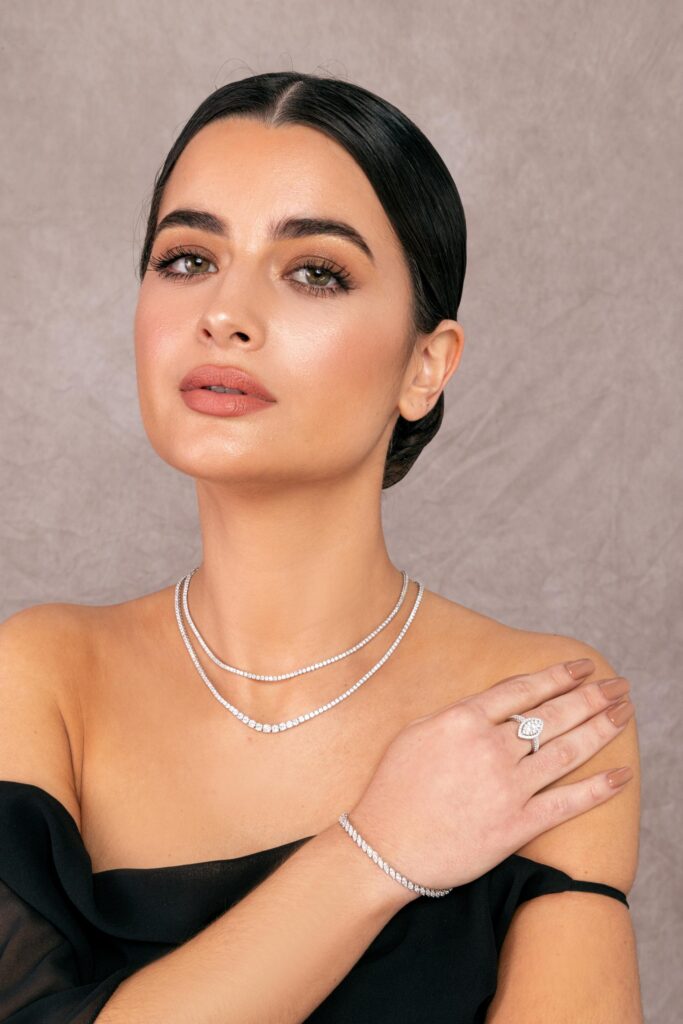
People describe Eminence Jewels as a business that has modern jewellery, and that really captures what the brand has grown into. We started purely with Engagement Rings. Then, as those clients got engaged, we naturally moved into Wedding Bands. Over the last few years, we have evolved into something more unique and more of a niche in the UK market. We have become specialists in Modern Mangalsutras.
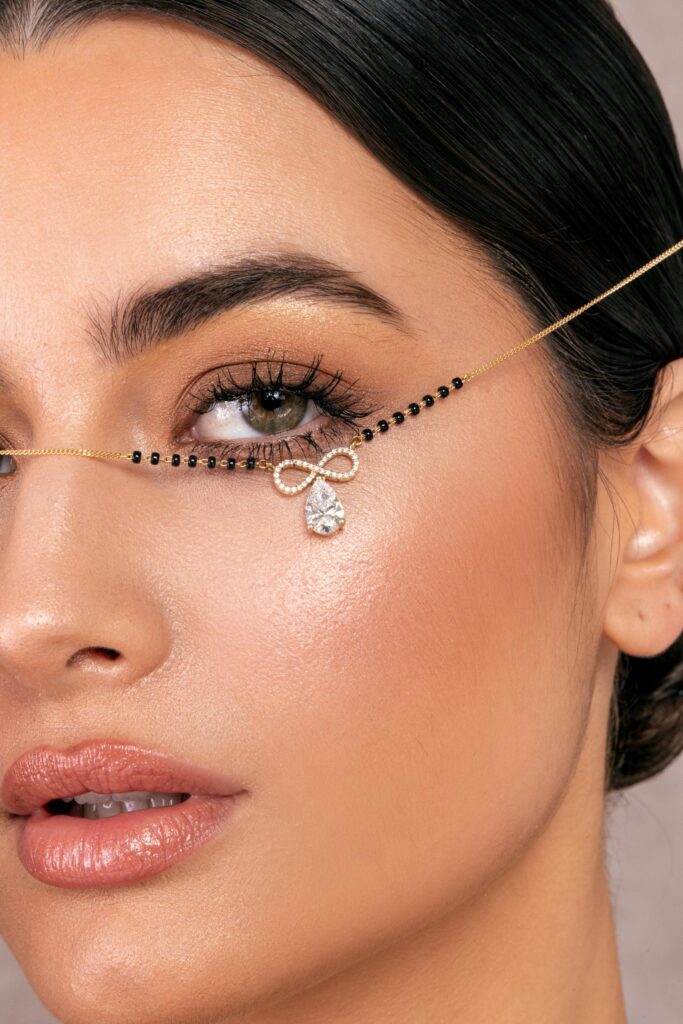
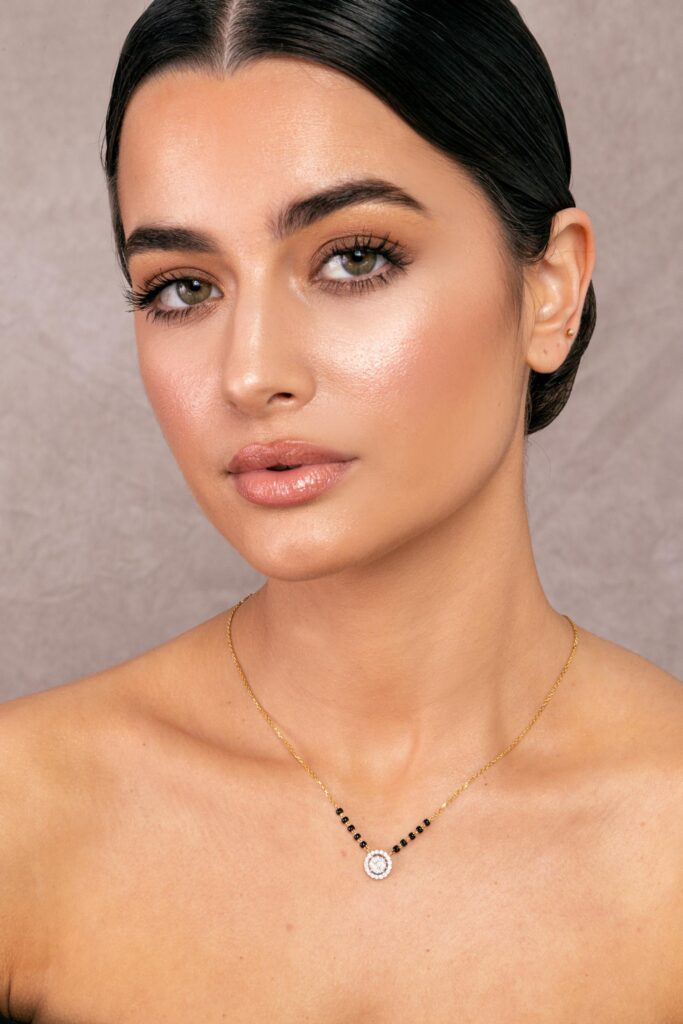
What defines the Eminence aesthetic is the balance between tradition and modernity. A Mangalsutra is one of the most symbolic pieces in a Hindu wedding ceremony, but I found that in the UK there were not many options that felt contemporary, minimal, and elegant. Something that today’s brides would genuinely want to wear every day. So instead of carrying pre-made stock or mass-produced designs, everything we create is completely bespoke. No two pieces are the same.
With Engagement Rings, one of the most creative processes is done with the groom. He chooses the stone and the style because he is trying to create the perfect surprise. The bride might give hints, but it is rarely exactly what she would have chosen herself.
The Mangalsutra is different. It is the one moment in the jewellery journey where the bride is deeply involved from start to finish. We personalise absolutely everything from the length of the chain, the number of beads, the bead pattern, the style and shape of the pendant, the diamonds, the halos, and the double stones. Every detail is shaped around her vision.
That is what defines the Eminence look. It is clean and modern with a subtle edge. It is minimal but meaningful and is always crafted to tell the bride’s story.
Beyond the design, what matters to me most is how I want people to feel when they wear our jewellery. I want our brides to feel special. I want them to feel seen. I want them to feel like this piece has not just been picked off the shelf. It was designed for them and with them, and it symbolises one of the biggest moments of their life.
Because we work so closely with them throughout the entire journey, we genuinely feel like we are part of their wedding.
Jewellery is often associated with emotion — love, memory and milestones. Do you think that emotional resonance has given your brand a unique voice in the men’s luxury market?
I would not say Eminence Jewels has created a unique voice in the men’s luxury market specifically, but what we have created is a very strong emotional voice in the Modern Mangalsutra space. What we have done at Eminence is shift the mindset completely. We have shown brides that this piece can be modern, meaningful, elegant, and deeply personal.
As mentioned, when someone creates something that is personal, their emotional connection becomes so much stronger. When a bride puts on her Mangalsutra, it is not just jewellery. It is a symbol of who she is, what she believes in, and the next chapter she is stepping into as she becomes a married woman.
Knowing that we have helped her feel that way, and that we have moved the Mangalsutra from a formality to something that she truly loves, is the emotional connection that sets us apart.
You’ve spoken before about emotional honesty being a strength, not a weakness. As a South Asian man in business, what has your journey taught you about leadership, vulnerability, and resilience?
Emotional honesty genuinely became a strength, not a weakness, but that understanding only came after hitting some of the lowest points in my life. Had I not gone through that period of depression and anxiety in my early twenties, I do not think I would have started Eminence Jewels when I did. As South Asian men, especially in our community, we are not taught to speak openly about how we feel. It is brushed under the carpet and it is not really understood. You are expected to be strong, get on with it, and not show any weaknesses at all.
For me, it was the moment where I admitted that I was struggling that things changed, because I had accepted that I needed help. That honesty forced me to look inwards and ask myself what I really wanted and what made me happy. That is what pushed me to make the leap and start my own business.
Starting a business is one thing, but staying in it, growing in it, and continuing to show up as a one-man operation is a completely different challenge. There is no team behind me. I am the one dealing with the clients. I am the one sourcing the diamonds from start to finish. I am the one delivering and solving any issues along the way. That level of responsibility has taught me resilience in a very real way.
Over the years, my business has grown purely through trust, relationships, and word of mouth. All my clients are friends of friends and family of friends. Every time someone chooses to work with me, it reinforces something I learned during my darkest period, which is that vulnerability does not make you weak. It makes you real. People connect with you more deeply because of it.
Everything that I have gone through has taught me that leadership is not about pretending that you have it all together. Leadership is about being self-aware, being grounded, and being accountable for your own actions. You need to understand your own emotions so you can handle challenges without everything collapsing around you. Resilience for me came from rebuilding from rock bottom. It is about bouncing back. It came from taking control of my own life instead of relying on others to give me happiness and satisfaction. My business became one of the biggest stepping stones in pulling me out of depression. It gave me purpose, structure, and a sense of identity. It probably turned the lowest point in my life into something very powerful, and it has made me who I am.
Men’s Mental Health Day often highlights the quiet struggles behind success. Have there been moments where entrepreneurship tested your mental or emotional wellbeing, and how did you find balance?
Being an entrepreneur has tested my mental and emotional well-being many times. Every single entrepreneur will tell you that running a business is not easy. The highs are incredible, but the lows can be extremely tough. I probably went twelve months without getting a proper customer. During those first twelve months, I could not even count how many times I thought about shutting the business down.
At that time, I was coming out of a very dark place already. When sales were not coming in, it felt like something else in my life that was not working. I kept thinking, “I need to cut my losses here and just exit the business, this is not for me, it is just another failure.” If it was not for one of my best friends telling me to hang in there, Eminence would not exist today. He kept reminding me that something would come and that one opportunity would bring other opportunities.
About twelve months in, within the space of three days, I had five sales come through. It felt like a massive breakthrough. But even after that, it was not a straight line. I would have busy periods, then completely dead periods, and then suddenly a few more sales. It was in that cycle that I learned something important. Slow periods are not a reflection of your worth, your ability, or the future of the business. They are part of the journey.
When I started building relationships with other jewellers in the industry, I realised that everyone goes through it. It is not just me. It is every industry, every entrepreneur, and every creative. Those conversations helped me feel less alone and taught me to be more level-headed and reactive.
Going through those difficult times with Eminence also helped me launch my second business, managing a portfolio of buy-to-let properties. Now I am even in the middle of starting a third business. Had I not survived those early setbacks with Eminence, I do not think I would have had the resilience to take on the new ventures I am working on now.
For me, finding balance came from accepting that business is not meant to feel positive all the time. There will be dips, there will be doubts, and there will be difficult moments. The key is to stay consistent and emotionally steady through those periods, reminding yourself that things can and will rise again. That resilience, that ability to hang in there, is what has genuinely shaped me as an entrepreneur today.
Luxury consumers today value authenticity more than ever. How do you weave your personal story and cultural identity into a brand that still feels globally relevant and aspirational?
Starting Eminence Jewels came from my own personal struggles. However, continuing and growing Eminence Jewels, especially moving into a new market such as the Modern Mangalsutra market, stems a lot from my cultural identity. For example, I am a Hindu Gujarati, and when I got married three and a half years ago and we were looking at all the things that go into a wedding, I experienced firsthand how powerful our traditions are. I also realised how little representation there was for a Modern Mangalsutra.
For me, authenticity is about being open in my story. I am not designing from the outside looking in. I am not just a normal salesman or a normal jeweller. This is my culture and my community, and I have lived that experience. I have been that customer, and I can resonate with them. I know how important these pieces are emotionally, and I know what today’s couples actually want, because I was once you.
From heartbreak to craftsmanship, there’s a clear evolution in your story. What role does creation – the act of designing something beautiful – play in your sense of healing and growth?
My wife always tells me that she sees me at my happiest when I make a sale. But it is never just about the sale. It is the full journey that brings me a sense of purpose. I am involved from the very beginning, whether that is designing the ring, choosing every detail, or making sure it feels personal to the couple. I provide advice and recommendations to make sure it is not just a standard ring that they can get from any shop floor.
I then get to witness the moment the guy opens the ring box, the nerves, the excitement, and afterwards I see the photos or the videos of the girl’s reaction when he proposes. Those moments of pure emotion, knowing something I created played such a meaningful role in their story, genuinely make me happy.
Then I get the message saying how happy they are and how perfect the ring is, and it reminds me that I am responsible for that sentimental piece that they wear every day. That feeling is unreal.
Now, with the Mangalsutra, it goes even deeper. Creating something bespoke and meaningful, something a bride will wear every day for the rest of her life, carries a different emotional weight. When I hear her feedback and she tells me how special the design is or how special it feels, and that it is exactly how she imagined, there is a real sense of fulfilment for me.
Creating these beautiful things has helped me grow because it gives me a purpose outside of work and stress. It reminds me that I am capable of creating joy, not just for myself but for other people. And I think that as men, especially in our communities, we do not often talk about that side of ourselves, the emotional satisfaction, the pride, and the connection.
For me, bringing someone happiness through something I have crafted and designed has been a huge part of my own healing. It keeps me grounded, it keeps me creative, and it makes me feel like what I am doing genuinely matters.
Eminence Jewels sits at the intersection of artistry and commerce. How do you balance creative integrity with the demands of running a successful business?
Eminence Jewels has always been more than a business. When I am designing a piece of jewellery, whether it is a ring, a Mangalsutra, or something else, it never feels like just a commercial process. It feels like I am being trusted with one of the most sentimental moments in someone’s life.
The reality of running a genuine business is discipline, resilience, and structure. The business side helps me maintain that creativity because I have clear processes, good communication, and a strong relationship with my suppliers. This allows me to design things calmly and intentionally. When the business is steady, everything else flows naturally.
Eminence sits at this intersection. The creative side is driven by emotion and purpose, and the business side is driven by the lessons I learned from rebuilding myself as a person. I do not let commercial pressure dilute the design, and equally I do not let the creative side make me forget that this is a real business that supports my lifestyle.
Balance is very important. Creativity gives Eminence its independence. The business side gives it its longevity. I have learned to honour both without losing myself in the process.
Looking ahead, what kind of legacy do you hope Eminence Jewels will leave — both in design and in how it redefines masculinity within luxury?
The legacy I want Eminence Jewels to leave is much bigger than just jewellery. In terms of design, I want Eminence to be remembered as the brand that modernised and redefined what a Mangalsutra could be for this generation. I want people to look back and say, “Eminence is the reason UK brides have started to take pride in their Mangalsutra again.” I want that ethos to last long after me.
The other half of the legacy, the part that is personal to me, is centred around masculinity. As a South Asian man, especially one who went through depression, anxiety, suicidal thoughts, and the pressure to keep all of that hidden, I want Eminence to stand as proof that vulnerability and strength can co-exist. I built this brand at my lowest point and at a time when most people would have expected me to fall apart. Instead, I turned that weakness into the foundation of something meaningful.
In our culture, men often think that they must be silent, strong, and unemotional, especially in business. But my entire journey shows that emotional honesty is not only acceptable, it can be a driving force. My clients know that I am real with them. I am not trying to pretend to be a huge operation. I am a one-man business who cares deeply about every single detail. Being authentic has taken me further than trying to be the stereotypical tough-guy entrepreneur.
If Eminence leaves any mark on masculinity within luxury, I hope it is this: that you can lead with empathy, openness, and emotional awareness and still build something successful. You do not need to hide your struggles to be respected. Resilience is not about bottling things up. It is about transforming them into a purpose.
My goal is for the brand to stand for both. Beautifully crafted Modern Mangalsutra, and a message that men can be vulnerable, creative, sentimental, and still incredibly strong. If future generations see that coming from Eminence, then I feel like I have left the right legacy.