Monty Panesar on Mental Health, Pressure and Why “A Broken Mind” Deserves the Same Care as a Broken Arm
Cricketer Monty Panesar speak openly to Luxurist about mental health.
Maybe because sport still carries this strange mythology around toughness, hearing this from a sports personality is unusual. Especially for South Asian men. You’re taught to keep going. Keep providing. Keep performing. Get up, get on with it, stop overthinking. Emotions become something to manage privately while the outside world keeps applauding how “strong” you seem.
But Monty speaks about mental health with the kind of honesty that instantly cuts through all of that.
No dramatic speeches. No polished therapy language. Just truth.
WHY HE DECIDED TO SPEAK OPENLY
For Monty, part of the reason was simple: challenging stereotypes.
“People think it can only affect certain people,” he says. “But it can affect anyone.”
That word, anyone, feels important.
Because mental health struggles are still heavily misunderstood in so many South Asian spaces, especially when somebody appears successful, religious, disciplined or high-functioning from the outside.
Monty shared that one of the biggest reasons he wanted to speak publicly was after losing a friend to suicide. “He was a very religious guy,” he explains. “Sometimes you feel like religion can sugarcoat things and you kind of think it doesn’t affect you because you’re a practicing Sikh or a Hindu or Muslim. But it can affect anyone.”
There was something deeply human about that honesty because so many communities still confuse faith with immunity from struggle.
THE SOUTH ASIAN “JUST GET ON WITH IT” MINDSET
Monty laughs slightly when he talks about growing up in a South Asian environment because honestly, most of us already know the script.
“Come on, brave up, get up, off you go, work hard,” he says.
Basically the emotional equivalent of being handed a cup of chai and told to carry on.
But he believes one of the biggest problems is that people don’t talk enough. Not even about the small things.
And weirdly, one of the most touching parts of the conversation was when he started describing everyday nonsense. Overheating something in the microwave. Rushing to work. Dropping a cup. Tiny little moments people usually dismiss as unimportant.
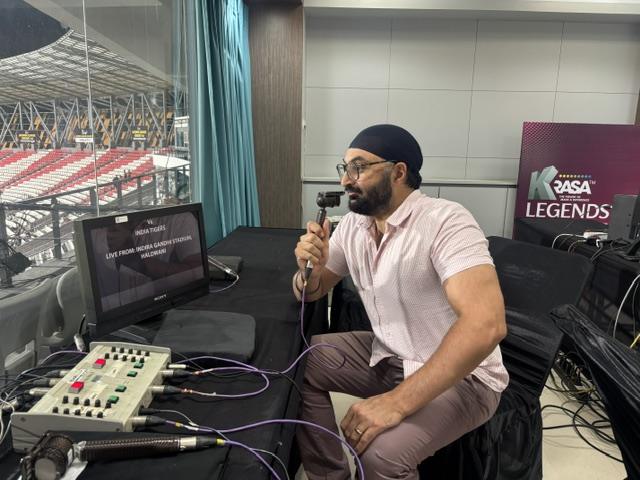
“Small chat is so important,” he says. “Talking is such a healing process.”
Honestly, there’s something really lovely about that idea. That connection doesn’t always have to be deep and dramatic. Sometimes mental health support is literally somebody checking in to ask how your day was going.
WHEN CRICKET STOPPED FEELING LIKE CRICKET
The hardest part of Monty’s story comes when he talks about performance pressure.
For athletes, mental health often becomes tangled up with identity because when performance drops, self-worth starts dropping with it.
“What ends up happening is you fight yourself rather than talking about what’s really going on in the mind,” he says.
That line honestly applies to so many people outside sport too.
You keep pushing, keep performing, keep pretending.
Keep fighting yourself internally instead of admitting you’re struggling.
Monty admitted there was a point where he fell out of love with cricket entirely. “I hated cricket, didn’t want to play it,” he says openly.
And yet from the outside, people often just saw “Monty Panesar the cricketer” rather than a human being whose mind was struggling underneath the performance.
“A BROKEN MIND CANNOT BE SEEN”
This was probably the quote that stayed with us most from the entire conversation.
“When you have a broken arm, it’s plastered up and everyone knows what to do,” Monty explains. “But a broken mind you cannot see. It’s invisible.”
Honestly, it’s one of the simplest but most powerful ways we’ve ever heard mental health described.
Because he’s right.
South Asian families are incredible at rallying around visible problems. Broken leg? Food arrives. Phone calls happen. Advice appears from seventeen aunties simultaneously.
But emotional pain is harder because nobody can physically see it.
And when something is invisible, people often misunderstand it instead of supporting it.
DID HE FEEL PRESSURE TO APPEAR STRONG?
“Absolutely.”
No hesitation.
And honestly, that one-word answer probably says everything about South Asian masculinity.
“You’ve got to be strong, you’re the provider, you can’t talk about these things,” he says.
There’s so much silent pressure on South Asian men to absorb stress without ever expressing vulnerability properly. To keep functioning no matter what’s happening internally.
But Monty repeatedly comes back to the same message throughout the interview: talk.
Talk to friends, to family, to professionals.
And talk before things become unbearable.
WHAT ACTUALLY HELPED HIM?
Family. Friends. Therapy. Conversations.
Not pretending everything was fine.
“I think what helped me was family and friends,” he says. “And my parents said, ‘something doesn’t feel right, why don’t you get some help?’”
Again, there’s something important there. Support does not always mean having all the answers. Sometimes it simply means encouraging somebody to seek help without shame attached to it.
Monty also now intentionally schedules time to speak to friends regularly.
“It’s like having a meeting,” he laughs. “‘Right, ring this friend up.’”
Honestly? That might be the most wholesome productivity hack we’ve ever heard.
HIS MENTAL HEALTH TOOLKIT
Gym sessions. Friendships. Reading. Current affairs. Staying mentally engaged with the world around him.
“I love working out,” he says. “It helps me stay in a really good head space.”
But he’s also realistic about modern pressures too, especially social media.
Monty believes platforms like Instagram and Facebook can both help and harm mental health depending on how vulnerable somebody already is.
And honestly, that balance feels true for most people now.
Social media can create connection.
It can also create comparison, pressure and noise.
Especially in communities where appearance and success are already heavily scrutinised.
THE ADVICE HE WANTS PEOPLE TO HEAR
“It’s okay to seek help….we all feel within our own community we’ve got to be strong,” he says. “But we can’t always.”
And maybe that’s the biggest takeaway from speaking to Monty Panesar.
Strength is not pretending you are invincible.
Strength is recognising when you need support before you completely disappear into yourself.
Or as he puts it himself: “Don’t be afraid to talk. The more you talk, the more you realise that you’re not alone.”