You grew up moving between India and the U.S., absorbing multiple cultural worlds. How has that shaped your musical identity and the way your music bridges “hyphenated selves”?
Growing up in the U.S. was difficult. It often felt like I was living between two worlds. At home, I was singing Carnatic music, bhajans, and eating Indian food; at school, I was listening to Destiny’s Child and doing everything I could to hide being Indian. It just wasn’t considered “cool” to be brown, and I remember being so embarrassed by the lunches my mom packed that I’d either skip them or eat alone. Everything shifted when I got to college. I joined dance teams, including a Garba team, and found a community that helped me reconcile both sides of myself. I realised they weren’t mutually exclusive. They could co-exist, and I could marry them through music. That was a defining moment in my early adulthood. Now, I’m proud of who I am and where I come from, and I love being able to blend both worlds into something that feels authentically mine.
You trained in Carnatic music early on, yet your work now spans hip-hop, pop, folk, and fusion. How do you negotiate tradition and innovation when composing?
Carnatic music will always be my home base – something I return to instinctively. But I grew up listening to everything: hip-hop, R&B, Indian folk, and fusion artists like Shakti. All of those influences shape me. When I compose, I usually start by grounding myself in my Carnatic roots, even if the final piece isn’t traditionally structured. Those influences appear as motifs, phrasing, or texture – subtle nods rather than strict adherence. For me, the joy lies in honouring where I come from while experimenting with how those roots can evolve.
When conceiving a new EP or single, where do you begin – melody, lyrics, mood, story? Do you have a creative ritual?
Every song has its own journey, but the blueprint is usually a beat or a vibe. With Stardust, I wanted something cinematic with strings and ethereal vocals, so I started with melody and built around it. For other tracks, especially those with Tamil folk or hip-hop influences, Shankar might create an incredible rhythmic drop, and we’ll work backwards from that. I try to be in a neutral, open state when composing. It helps me follow where the song wants to go rather than forcing it.
Vulnerability features prominently in Sundari, especially in tracks like Ini Ninte Lokam (Go Off). How do you balance openness with curation in personal storytelling?
It’s a delicate balance, and not every song lands in the same place. For Go Off, I wanted expansiveness, which is why the strings and vocal layers slowly build, but I also wanted an anthem. Finding that equilibrium was challenging. Across Sundari, the openness came first. This EP is deeply personal, and the storytelling guided the production, arrangement, and sound design. Curation was definitely present, but it served the emotional truth rather than diluting it.
Ini Ninte Lokam carries a message of boundaryless self-expression. What inspired that vision, and how does it reflect the EP’s larger narrative?
Ini Ninte Lokam is one of my favourite songs I’ve ever made. I wanted it to feel huge, limitless – almost like a mantra women could carry with them. The inspiration came from my mother. She endured a difficult, abusive marriage and made incredibly brave, unconventional decisions to get my sister and me out of that environment.
In the song, I imagined her mindset: I can do this. I can leave. I can build a new world. Of course, the irony is that the real world is full of boundaries for women – patriarchy, misogyny, cultural expectations. So the song represents a kind of utopian self-belief. In your mind, you have to convince yourself your world is boundaryless, even when reality says otherwise. Within the EP, each track reflects a different phase of my mother’s journey and, by extension, my own. Go Off is the moment of realisation and momentum — the spark.
You began on YouTube, navigating ever-changing algorithms. How has that shaped your approach to music videos and release strategy?
Honestly, I’m still figuring it out. Platforms can be symbiotic or parasitic depending on the week. YouTube changed my life – it gave me independence and freedom. But the landscape has shifted dramatically. Attention spans are shorter, and you have to hook viewers in the first three seconds. Keeping up with constant posting is difficult, especially when I’m in album or composing mode. Managing social media is another full-time job, and I run everything myself. But alongside the chaos of platforms, live music remains my constant – something no algorithm can replace. Evolving my show, building that connection, and performing keeps me grounded, no matter what’s happening online.
Does the demand for short, attention-grabbing content ever conflict with the emotional integrity of a song?
I think about this a lot. Viral-style content doesn’t really align with my personality or artistic process. I’ve never started a song with “How will this grab attention?” I always prioritise the song and its emotional arc. If it resonates, amazing. If not, that’s okay too. My work begins with musical truth, not optimisation.
Fusion artists often walk a tightrope: honouring roots without exoticising, innovating without dilution. What pitfalls or misconceptions do you see in how fusion music is consumed or marketed?
The whole point of fusion is to innovate while acknowledging your roots – but not every song will balance both equally. Some pieces lean traditional, others lean experimental. There’s often an unrealistic expectation that everything must be “pure” or perfectly representative of a tradition. But creativity doesn’t work like that. It’s okay to reference something without reproducing it exactly. As long as you respect the source, you should feel free to explore. Audience expectations can sometimes box artists in, so I try not to let that influence my choices. I follow what serves the music.
Your newest single comes with a visually striking music video. Tell us about it — what inspired it, and how does it reflect where you are creatively?
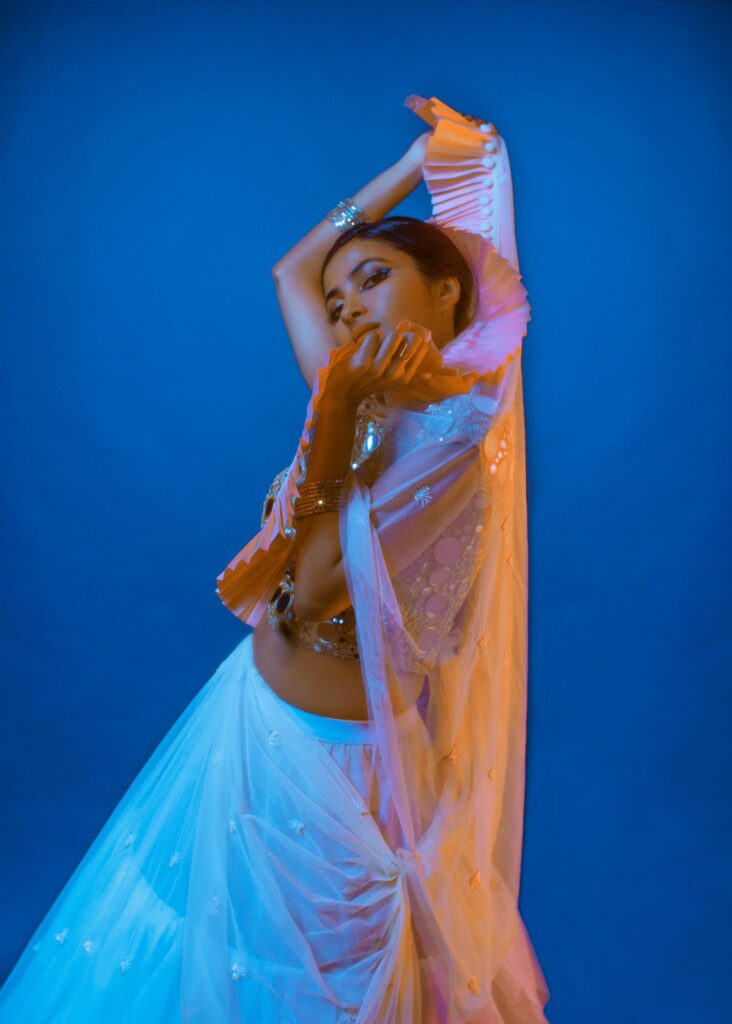
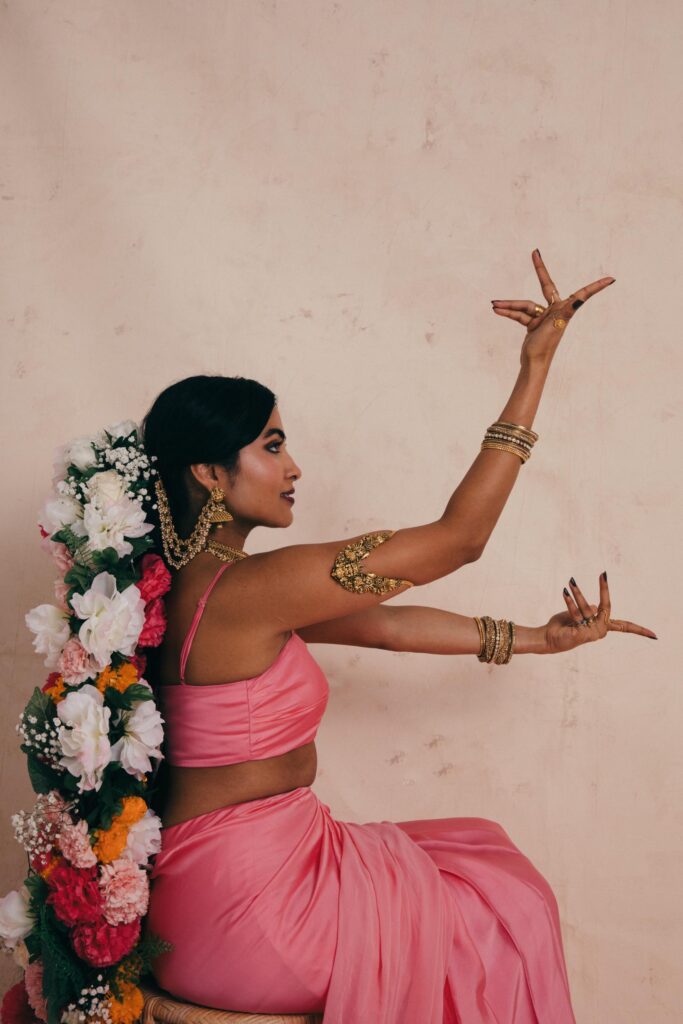
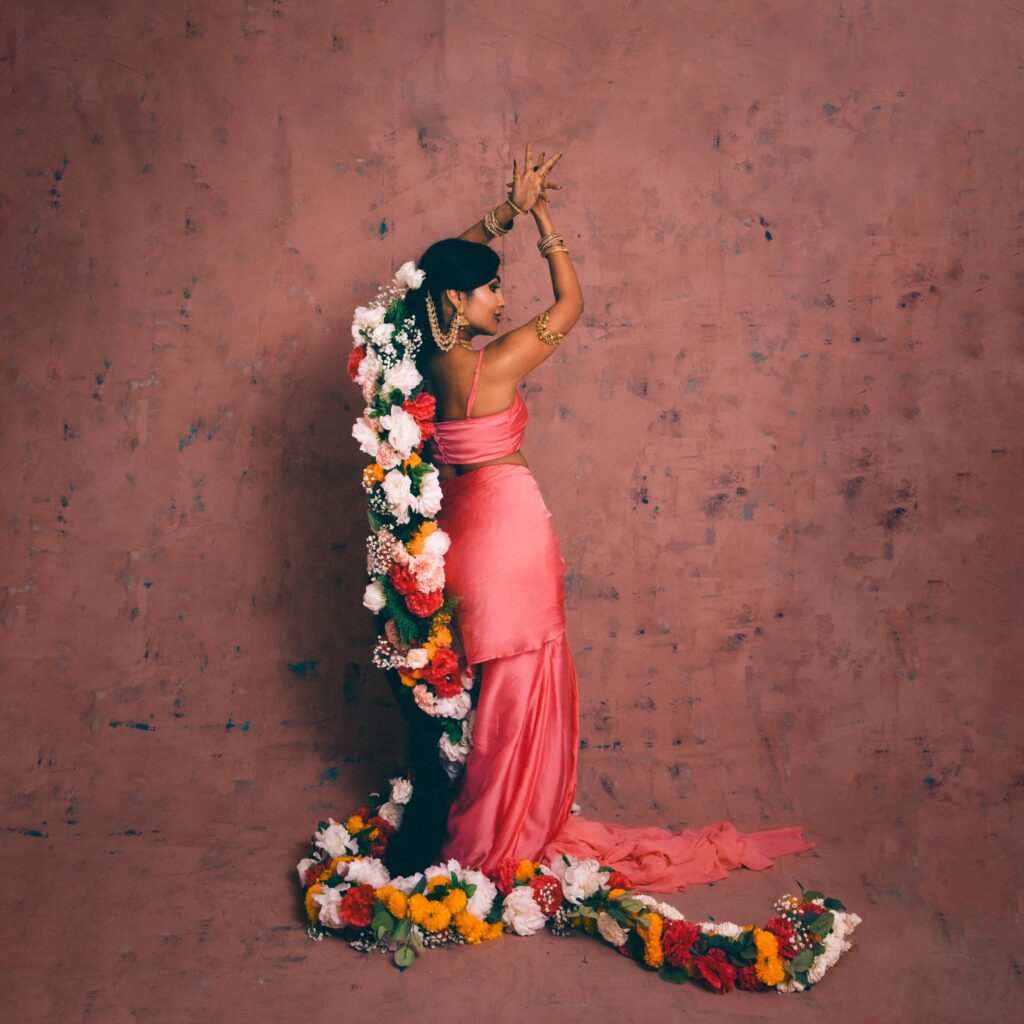
I recently released the video for Go Off from the Sundari EP, directed by Amit Krishnan. It’s inspired by the iconic Malayalam film Manichitrathazhu with Shobana. The video follows a woman discovering a hidden room in a house – a metaphor for rediscovering parts of herself. The statues of women she encounters come to life as she dances and frees them, symbolising liberation and self-ownership. We shot in Fort Kochi, Kerala, over an intense 18-hour day after a week of prep. I trained extensively in Bharatanatyam for the choreography, led by Ashwini Puttaral. It was one of the most fulfilling shoots I’ve ever done, and one of my favourite videos to date.

You recently performed in London. What does it mean to bring your sound to a city that thrives on cultural hybridity?
I love performing in London – it feels like a warm hug. The audience is open-minded and willing to embrace new music, even songs they’ve never heard before. I performed tracks from Sundari alongside older hits and Bollywood mashups, and the atmosphere was so welcoming. That openness is my favourite thing about London, and I can’t wait to return.
Concert managed by Ciaarts: www.ciaarts.co.uk