Your Grandfather Didn’t Cross an Ocean so You Could Stop Thinking By Rahim Hirji
I was in a demo at an education company in Shanghai in 2013, watching a child work through a reading exercise on a screen. The room was quiet apart from the sound of mouse clicks. The child was maybe thirteen years old, and he kept pausing before certain words, hovering just a second too long. What struck me was not the programme. It was what the programme was doing with those pauses. It was noticing them, processing and then adjusting the difficulty by nudging the child forward before he had time to feel stuck.
This was more than a decade ago, and it was responding to the child in real time. I don’t say this as someone who was frightened by what I saw. I was, if anything, astonished. I had spent years working in the education technology industry, and I thought I understood the boundaries of what software could do. Standing in that room, I realised I understood very little. Something was coming that most of us in the industry were not remotely prepared for. I filed it away to trip highlights. And I watched.
I watched through the years that followed, as what I had glimpsed in Shanghai moved from research labs into products, from products into workplaces, from workplaces into daily life. Then came the moment that opened the floodgates for everyone else. I remember the week ChatGPT launched. I typed something into it. Then I typed something harder. Then I pinged a friend on Whatsapp: “Have you seen this?”
What happened next is a story you know, because you lived it too. Everyone reached for the same comparisons: magic trick, then threat, then arms race. Governments started treating it the way previous generations treated oil. Companies scrambled. Individuals experimented.
But something else happened, in the background, more interesting and, to me, more worrying than all the noise about new products and new models.
Within organisations, I started to see people stop trusting their own thinking. It was neither drastic nor immediate and it started with a prompt, then a “summary this” followed by decisions deferred to whatever the screen returned. I joined meetings where senior people, people paid for their judgement, would pause mid-sentence and say: “Let me just check what it says.” Nobody decided this was the new normal. It just became the new normal. I started calling it drift. Drift is the unconscious handover of human judgement to a machine. It is one of the most dangerous things I see in organisations right now, not because it is obvious, but because it looks like progress. It looks like efficiency. It feels like relief.
That is the research behind this book is based on 200+ companies across 30 countries. And the question is the same one every time. If everyone now has access to the same tools, the same capability, what is the differentiator? The answer is simple, but uncomfortable. And it all comes down to how human you are.
It comes down to your judgement, your curiosity, your willingness to say “this doesn’t feel right” when everything on the screen says it does, to sit with ambiguity when the easy path is to let the tool decide. These tools are capable beyond anything we have built before.
But they do not carry responsibility for the consequences of their answers. Only you do. That distinction matters more than any of the headlines suggest. I’m not saying this as someone who stands against the technology. I use these tools. I find them genuinely useful. Some days they astonish me. That is partly why I worry.
My family got on a boat from Gujarat to East Africa. A generation later, they got on a plane from East Africa to the UK. They did not have a roadmap for either journey. What they had was judgement: the ability to read unfamiliar situations, to build trust across cultural lines, to hold onto who they were while learning how to belong somewhere new.
Those are not soft skills. They are survival skills. Every immigrant community knows this. You don’t have to come from that story to recognise the instinct. Every family that has ever had to start again in unfamiliar territory knows what it costs to hold onto yourself while the world around you changes.
When I think about what my grandparents’ generation would make of this moment, I think they would see it clearly: another crossing. Not comfortable, not certain, but obvious. They were not people who waited before they acted. They moved, figured it out as they went, and did not leave themselves behind in the process. That is the calculation every generation in a community like ours has had to make. How do we step into a world that is changing faster than we can fully understand, without losing the thing that made us who we are? This is that moment. The difference is what is at stake. Not geography this time. Your mind. So what do we do about it?
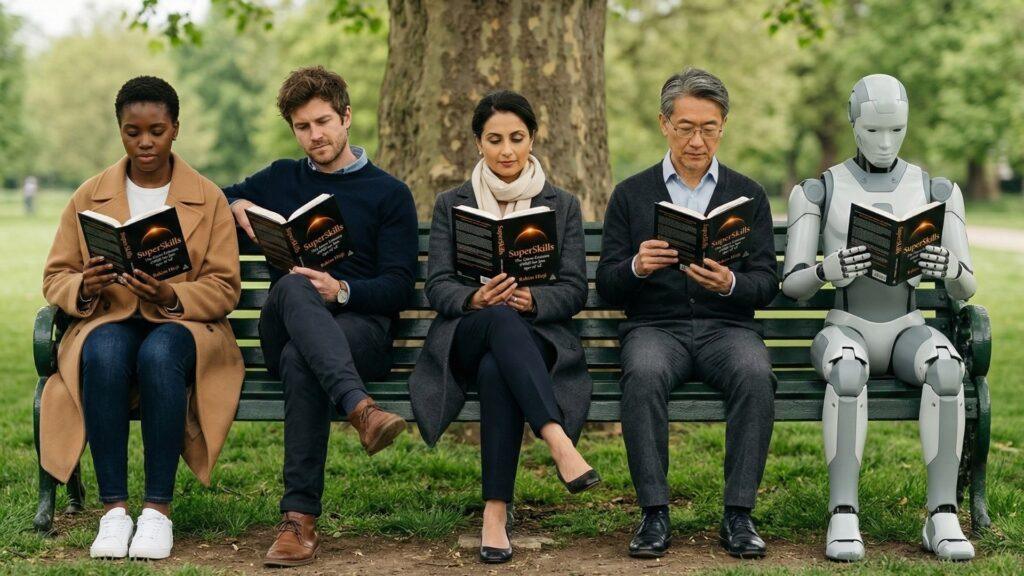
That is why I wrote this book. Not to warn against these tools, and not to celebrate them. To make the case that the people who will thrive in this era are not the ones who use technology most. They are the ones who remain most fully human while using it. I am a believer in humans. These days, that feels like a radical sentence to write. The machine is not the point. What you do with it is. Your grandfather didn’t cross an ocean so you could stop thinking. Neither did mine.
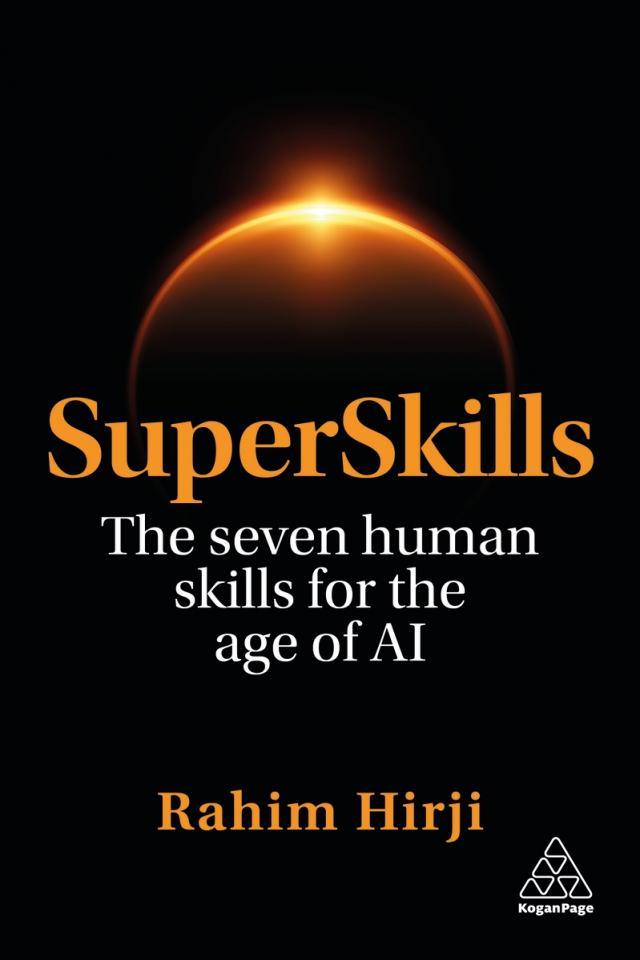
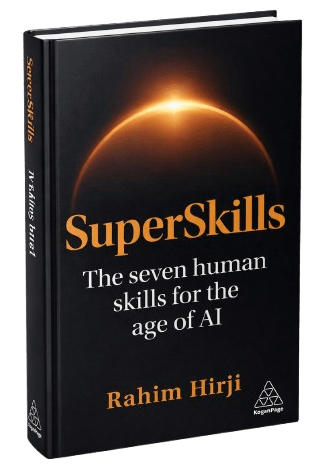
SuperSkills: The Seven Human Skills for the Age of AI by Rahim Hirji is published by Kogan Page on 3 July 2026. Available to pre-order now at superskillsbook.com