Why South Asian women deserve a different conversation about menopause.
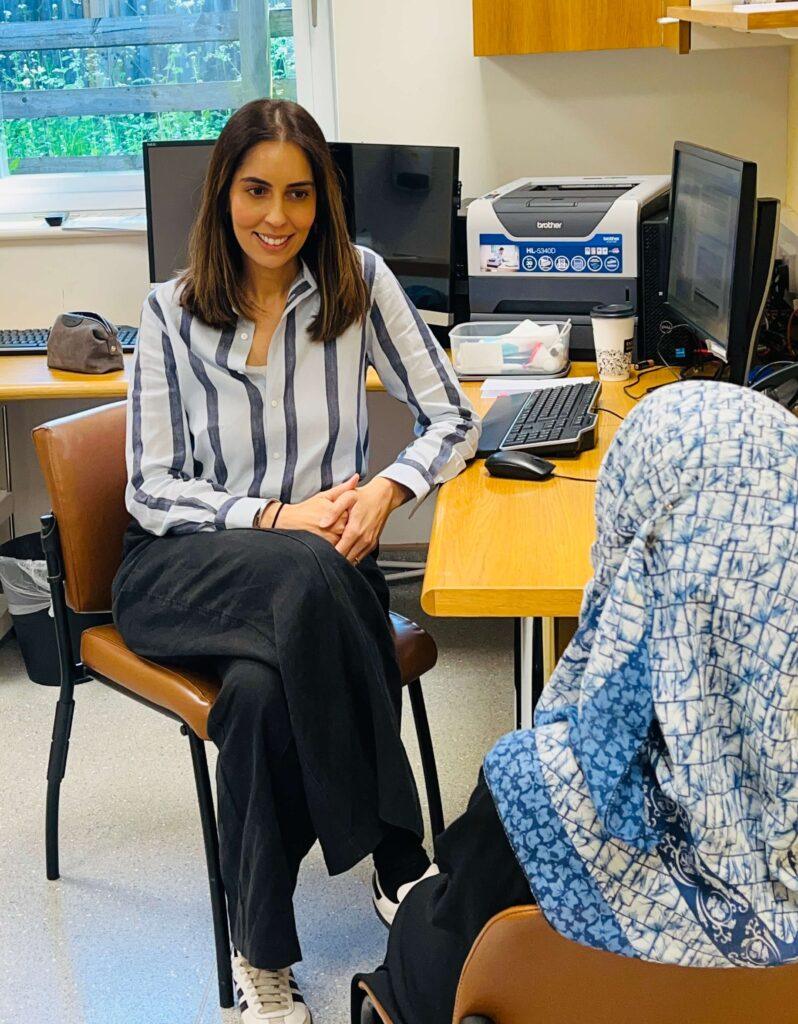
There is a sentence I hear surprisingly often in my menopause clinic, ‘I just thought I wasn’t coping anymore.’
Sometimes it comes from the woman managing a team at work while simultaneously caring for children and ageing parents. Sometimes from the woman who has spent years putting everyone else’s needs before her own. Sometimes from someone who has seen her GP several times about poor sleep, anxiety, aching joints or exhaustion without ever connecting the dots.
And sometimes, when I say the word perimenopause, there is an almost visible sense of relief, because suddenly there is an explanation.
As a British South Asian women’s health and menopause specialist, I spend a lot of time talking about the inequalities that exist in women’s health, but I also spend a lot of time listening. And one thing has become increasingly clear to me: when we talk about menopause in Britain, the experiences of South Asian women are still too often missing from the conversation.
And that really matters.
There is no single ‘South Asian menopause experience.’ We are Pakistani, Indian, Bangladeshi, Sri Lankan and Nepali. We may be Muslim, Hindu, Sikh, Christian, Buddhist, Jain, another faith or no faith at all. Some of us were born in Britain; others migrated here. Some speak English as a first language; others feel far more comfortable discussing something as intimate as menopause in Urdu, Punjabi, Gujarati, Hindi or Bengali.
Our experiences are not interchangeable, but there are themes I hear repeatedly.
When menopause looks like everything except menopause and what I mean by that is that menopause isn’t simply hot flushes, night sweats and the end of periods.
Women describe a whole host of symptoms such as waking at 3am and being unable to fall asleep again. Forgetting familiar words halfway through a conversation. Walking into a room and wondering why they are there. Feeling suddenly anxious despite never having experienced anxiety before. Suddenly being afraid to drive at night or on motorways.
Then there are headaches, palpitations, aching joints, changes in libido, vaginal dryness and overwhelming fatigue.
For a woman in her forties who may be at the peak of her career while simultaneously navigating teenagers, elderly parents, relationships and an enormous mental load, it isn’t difficult to see why these symptoms are often labelled as “stress” or life just… ‘lifing.’
And I think many South Asian women have become particularly accomplished at just carrying on and I think it’s partly because we were raised, in many cases, by women who carried on too.
Our mothers and grandmothers may not have had the language of perimenopause. There wasn’t necessarily a conversation about brain fog, vaginal oestrogen or HRT. Menopause was something that happened, quietly, and life continued.
Although I have enormous respect for that generation, I don’t think inheriting their resilience means we also have to inherit their silence.
Culture isn’t the same as religion, this distinction matters enormously.
While developing culturally competent menopause resources for Muslim, Hindu and Sikh women, one theme repeatedly emerged: practices we sometimes assume are religious may actually be cultural, generational or specific to particular families.
For example, Sikh teachings do not regard menstruation or menopause as spiritually impure and do not restrict women from prayer or attending the Gurdwara. Yet some Sikh women may still have grown up in households where menstruation, menopause and sexual health were considered deeply private subjects.
Similarly, Hinduism has no blanket prohibition on discussing menopause, examinations or HRT, and some traditions view midlife as a period of increasing wisdom and spiritual transition. Yet cultural beliefs around menstruation and intimate health may still shape an individual woman’s experience.
For Muslim women, questions may be different again. I am frequently asked how HRT fits around fasting, whether an oestrogen patch affects ritual washing, whether medicines contain halal ingredients and how irregular bleeding might affect prayer and fasting.
None of these concerns should be dismissed, but neither should they be assumed simply because a woman is South Asian.
Culturally competent healthcare isn’t about memorising a list of things that ‘South Asian women believe.’ In fact, that can create another stereotype. It’s about being curious enough to ask about the symptoms we still whisper about.
And there are other conversations I think we urgently need to normalise: vaginal dryness, painful sex, recurrent urinary infections, bladder symptoms, prolapse.
These are incredibly common problems around menopause, yet they can be difficult for any woman to discuss. Add cultural expectations around modesty and intimate health, and that conversation can become even harder.
The resources we’ve developed recognise that South Asian women may not volunteer vaginal, urinary or sexual symptoms unless someone sensitively asks. These symptoms can affect sleep, exercise, confidence, relationships and overall quality of life.
I sometimes wonder how many women are repeatedly buying cystitis treatments, avoiding intimacy or quietly adapting their lives around bladder leakage without realising that help exists.
We need to become much more comfortable saying the words: vagina, vulva, sex, bladder, menopause.
They are not shameful words.
And women should not have to wait until symptoms become unbearable before feeling permitted to mention them.
For many South Asian women, cultural normals expect that the family comes first. But where does that leave us? This is perhaps the part that resonates with me most personally. Within many South Asian families, women are the glue.
By midlife, we may be supporting children while simultaneously beginning to care for parents. We are often the organiser, emotional support, appointment-maker, cook, problem-solver and keeper of everyone’s calendar. As clinicians, we need to recognise that caring responsibilities and multigenerational family life can influence when women prioritise their own health or seek help.
And it’s something I see this in clinic all the time. Women will tell me, almost apologetically, that they’ve been meaning to make an appointment for months. But there was always something more urgent, someone else who needed them more.
But eventually we have to ask: who is looking after the woman who looks after everyone else?
Prioritising our health isn’t abandoning our families. Quite the opposite. South Asian women deserve to enter the next decades of their lives strong, healthy and able to enjoy them.
Menopause is also a health opportunity and this is where I want the conversation to move beyond symptoms. Midlife gives us an opportunity to think about the health of our future selves. That means talking about blood pressure, cholesterol, blood sugar, bone health, movement, sleep and maintaining muscle strength as we age.
It also means acknowledging the traditions many South Asian women already value. Yoga, meditation, spirituality, prayer and community can all play meaningful roles in wellbeing. The answer isn’t to dismiss these approaches in favour of ‘Western medicine’. Good care can respect them while also making sure women have access to evidence-based medical advice.
And then there is HRT! I encounter plenty of anxiety around it. Some women have heard it inevitably causes breast cancer. Others think it simply delays menopause or would prefer to go down the ‘natural’ route. Some worry about becoming dependent on hormones.
HRT is not right for every woman, and not every woman will want it. But every woman deserves accurate information about her options so she can make her own decision.
That includes seemingly small details that can matter enormously. A vegetarian woman, for example, may want to know whether a progesterone capsule contains animal-derived gelatin. A Muslim woman may want to know whether her medication is compatible with fasting. These aren’t inconveniences but are part of genuinely personalised healthcare.
We need to change the conversation. I don’t want the next generation of South Asian women to arrive at midlife knowing as little about menopause as many of us did. I want daughters to know what their mothers are experiencing, I want partners to understand, I want women to be able to say, ‘I think I’m perimenopausal’ without embarrassment.
And I want our healthcare system to recognise that equality doesn’t mean giving every woman exactly the same consultation.
Sometimes equitable care means asking a different question.
-Would you prefer an interpreter?
-Would you like a female clinician?
-Are there ingredients in medication that you prefer to avoid?
-Is there something about your faith or cultural practice that you’d like me to understand?
-Are you having vaginal or bladder symptoms that you’ve felt too embarrassed to mention?
Those questions cost very little, but to the woman sitting opposite us, they can mean everything. Perhaps that is the biggest lesson menopause has taught me… women don’t simply want to be treated. They want to be understood.
Our mothers’ generation often navigated menopause quietly and we can honour their strength without repeating their silence. By talking, by asking questions, by seeking help. We can take up space in our own healthcare.
And perhaps most importantly, we can teach the women coming behind us that caring for themselves isn’t selfish but more an act of self preservation and self-love. Menopause isn’t the end of our relevance, ambition, sexuality or identity.
For millions of South Asian women in Britain, it can be the beginning of something else entirely – a healthier, louder and more informed chapter.
Six Things I Want Every South Asian Woman to Know
1. Menopause is about much more than periods.
Changes in sleep, mood, memory, joints, bladder health, sexual health and confidence can all be part of the picture.
2. Don’t automatically assume you’re ‘just stressed.’
If you’re in your forties or fifties and don’t feel like yourself, menopause deserves to be part of the conversation.
3. Please talk about intimate symptoms.
Vaginal dryness, painful sex, bladder leakage and recurrent urinary infections are common and treatable. You do not have to quietly live with them.
4. Your culture or faith belongs in the consultation if it matters to you.
Dietary preferences, fasting, modesty, medication ingredients and religious practice are all reasonable things to discuss.
5. There isn’t one right menopause treatment.
Lifestyle measures, HRT and non-hormonal treatments all have a place. Your care should reflect your symptoms, medical history and preferences.
6. You are allowed to put yourself on the list.
After decades of looking after everyone else, your health deserves your attention too.
We can honour the resilience of the women who came before us without inheriting their silence.
Dr Farah Ahmed
MBChB MRCGP DFSRH DRCOG
Women’s Health & Menopause Specialist
@drfarahwomenshealth
The Medical Chambers Kensington