I went into the press screening of The Cycle of Love not quite knowing what to expect. I knew the outline of the story, of course: a young Indian man falls in love with a Swedish woman and, when she returns home, he sets off on a second-hand bicycle to find her, travelling 6,000 miles from India to Sweden. It sounds almost too remarkable to be true. Yet I came out of the cinema feeling that the distance he travelled was only one part of what makes this film so special.
At its heart, this is the true story of Pradyumna Kumar Mahanandia, known as PK, and Lotta von Schedvin. They met in Delhi in 1975 when Lotta sat for a portrait by PK, who was working as a street artist. Their connection was immediate, but when Lotta returned to Sweden, PK did not have the money for a plane ticket. So, in 1977, he bought a bicycle and began the journey west to reach her. They have now been together for nearly 50 years.
It is wonderfully romantic, and I would challenge anyone not to be moved by the sheer determination of a man who travelled across countries and continents because he believed so completely in the woman he loved. It also raises the bar rather dramatically for the rest of us. PK cycled 6,000 miles, while some people cannot even manage a text back. But the film is not sentimental or overdone. It is gentle, funny, moving and full of very human moments.
What stayed with me most, however, was not only the romance. PK was born into a Dalit family and grew up experiencing the cruelty and humiliation of caste discrimination. The film shows how deeply that treatment affected his confidence and his sense of his own worth. I found those parts genuinely upsetting. It is difficult to accept that people can be divided and treated so differently within the same country and community simply because of the family into which they were born. The fact that this discrimination has not disappeared makes those scenes feel especially important.
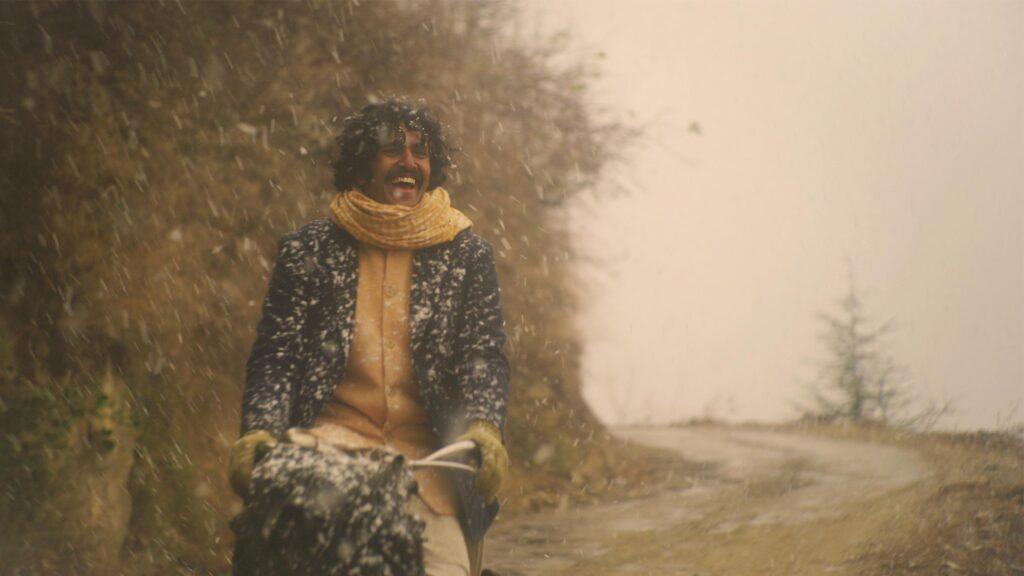
There is pain in that part of PK’s story, but the film does not leave us in despair. Today, he continues to speak out against caste discrimination and uses his own experience to bring people together. That gave me hope. Awareness matters, but so do the people who choose to challenge injustice with love, dignity and action. PK is one of those people, and the film allows us to understand that the journey to Sweden was not only a journey towards Lotta. It was also a journey towards believing in himself.
A few days after the screening, I had the chance to speak to Chirag Lobo, who plays the younger PK, and director Orlando von Einsiedel. Chirag’s performance feels so natural that it is easy to forget how demanding the role must have been. Much of what we see was not tightly scripted. The production followed parts of PK’s original route, and Chirag spoke to real people they met along the way. Their conversations about love, marriage, dreams and discrimination were allowed to unfold honestly.
Chirag told me that, although he could never be PK, his responsibility as an actor was to come as close to the truth as possible. He researched PK’s life as a Dalit man and attended the annual gathering in India that honours Dr B R Ambedkar, spending three days with members of the Dalit community and listening to their experiences. PK and Lotta were also present throughout filming, so he could receive their feedback and make sure his portrayal remained honest.
The preparation went beyond learning about PK’s past. Chirag had to understand the way PK meets people. He described a man who can enter a conversation completely open, without judgement, treating whoever is in front of him as an equal and giving them his full attention. That quality is central to the film. You see strangers lower their guard because they feel listened to, and those exchanges bring a lovely warmth and truth to the story.
When I asked which part of PK he connected with most personally, Chirag spoke about PK’s relationship with his late mother. She encouraged his artistic gift, and he still feels her presence guiding him. That touched me deeply. The flashbacks between PK and his mother are among the most tender moments in the film, and you can feel how much of the man he became was shaped by her love. Even the co-production company, Kalabati Pictures, bears her name.
Chirag also spoke about PK’s ability to forgive and to see every person as worthy of love. He admitted that he initially found it difficult to believe anyone could live with that degree of openness, but embodying it during filming changed him. As he put it, every human being, regardless of caste, gender, sexuality, ethnicity or nationality, wants to be loved and deserves that love. It is a simple idea, but in the world we are living in, it feels anything but small.
For Orlando, who has spent much of his career telling powerful real-life stories, PK and Lotta offered the chance to make something deliberately optimistic. He wanted to create a film filled with joy and human connection, something that could remind us of the good in people at a time when so much of what we absorb each day is bleak. PK’s journey was only possible because of the kindness of strangers. People gave him food, clothes and somewhere to sleep. They repaired his bicycle and helped him continue west. The film honours those small acts as much as it celebrates the grand romantic gesture.
Orlando explained that one of the challenges was the lack of archive footage from 1977. There was no camera crew following PK as he crossed borders, so the filmmakers built the story from detailed interviews with PK and Lotta, performances by Chirag and Mina Dale as their younger selves, and encounters with real people along the original route. The result sits somewhere between documentary and dramatisation, but it never feels artificial. Those unscripted conversations give it the texture of real life.
That authenticity was reflected in the screening room. Many of us arrived unsure of exactly what we were about to watch and left genuinely impressed. There were big bursts of laughter, a few tears, including mine, and moments when you could sense the whole audience willing PK forward. By the end, the room felt full of affection for him, for Lotta and for the people who had helped carry their story across the world.
Priyanka Chopra Jonas joined the film as an executive producer, bringing valuable support and visibility to an independent production. Orlando told me that she connected immediately with a story about an underdog overcoming an extraordinary journey and with the film’s positive, joyful spirit. Her platform has helped the film reach audiences who might otherwise never have discovered it, which is exactly what a story like this deserves.
The Cycle of Love will naturally appeal to romantics, but I genuinely think it has something for everyone. It is about determination, faith, identity, resilience and the courage to trust your own heart. It confronts discrimination without allowing hatred to become the final word. Most of all, it reminds us that kindness can change the direction of another person’s life, sometimes in ways we may never fully know.

I left the film feeling moved, but also lighter. It takes you through anger, sadness, laughter and hope, and it gives you people to believe in. In a time when we are so often shown what divides us, this is a story about what can happen when we meet one another with openness and see the human being in front of us. I would wholeheartedly encourage you to see The Cycle of Love on the big screen. Take someone you love, take someone who needs a little hope, or simply go for yourself. I have a feeling PK and Lotta’s story will stay with you long after the credits have finished.
The Cycle of Love has released in Cinemas nationwide in UK and Ireland cinemas.