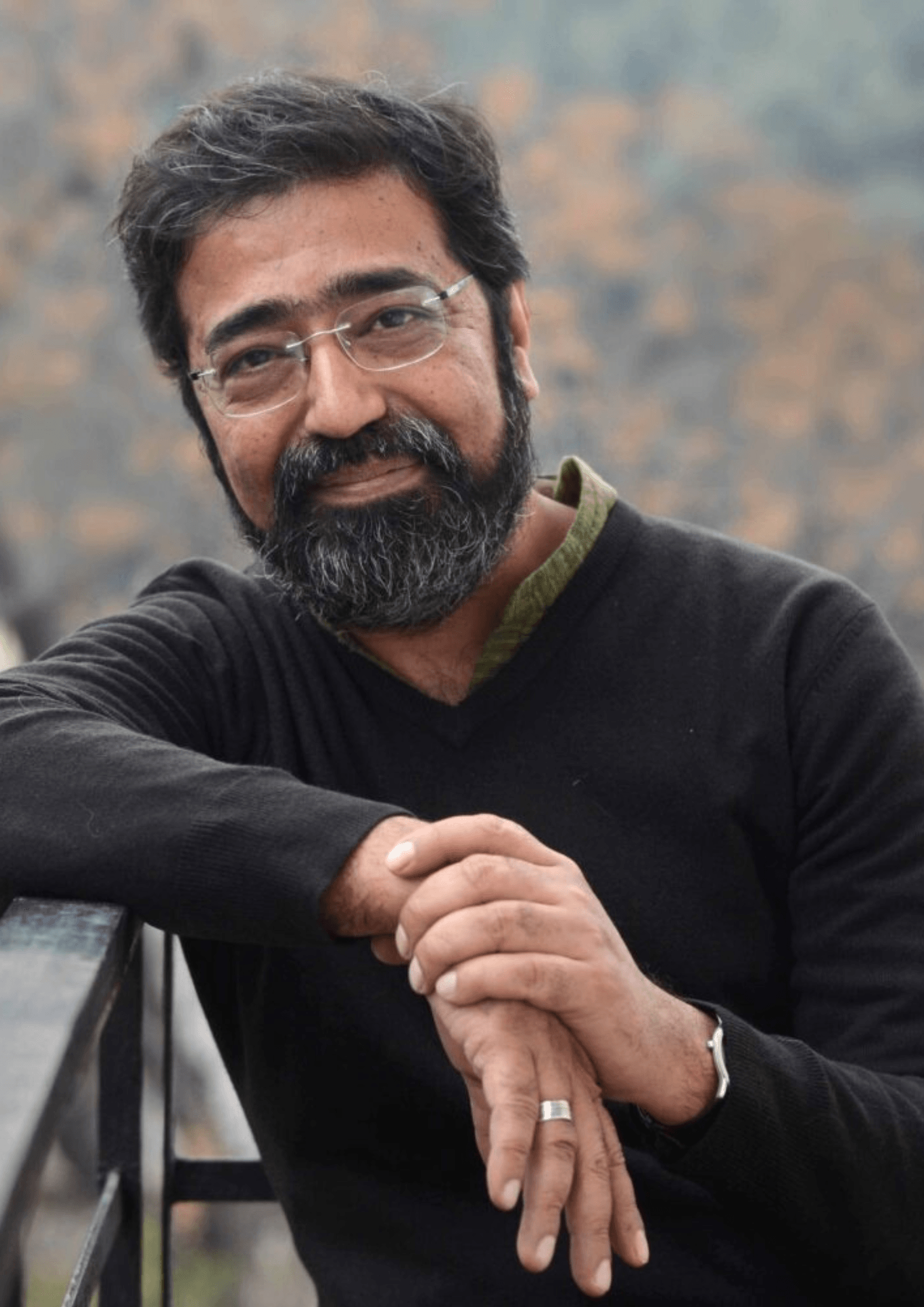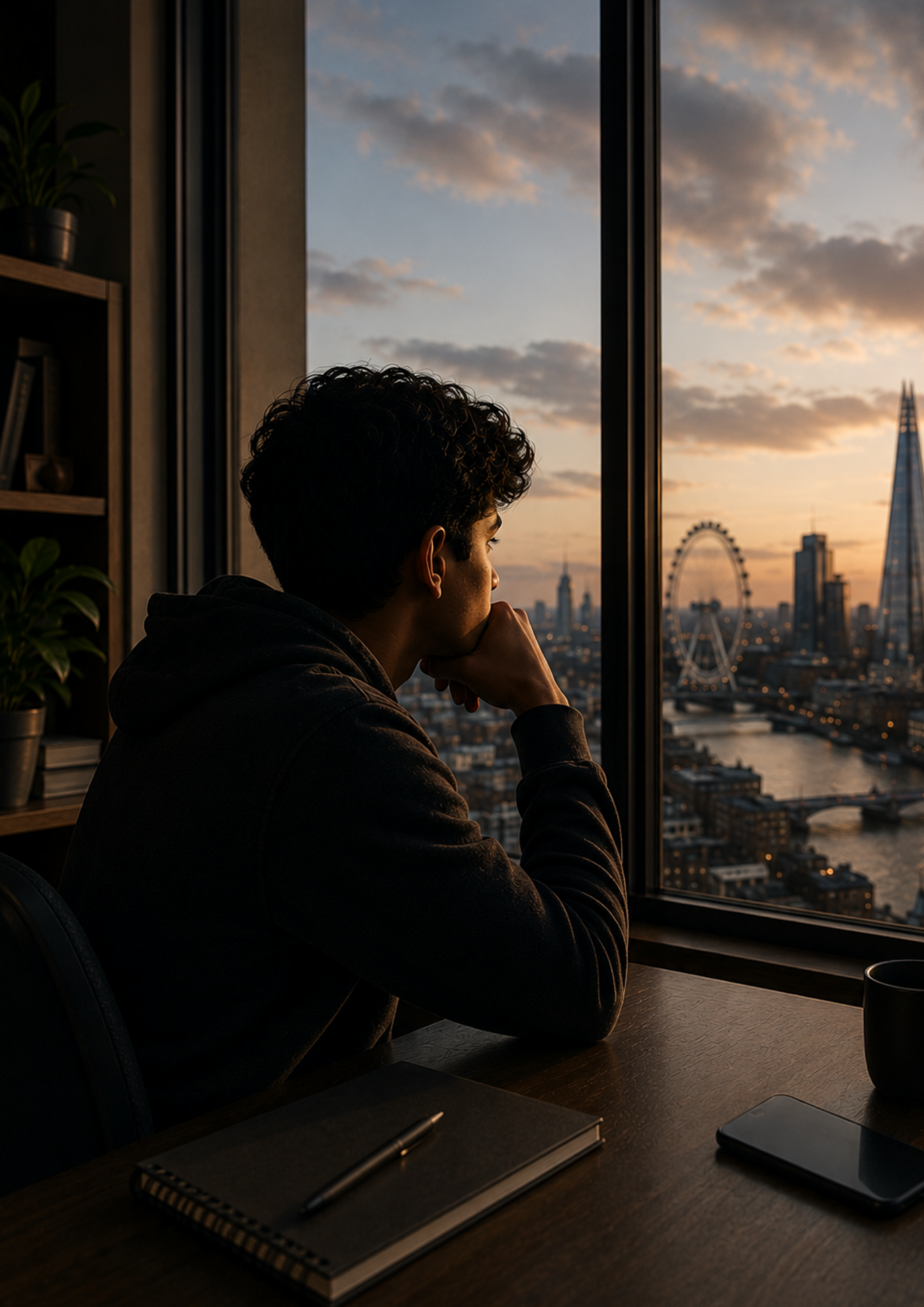
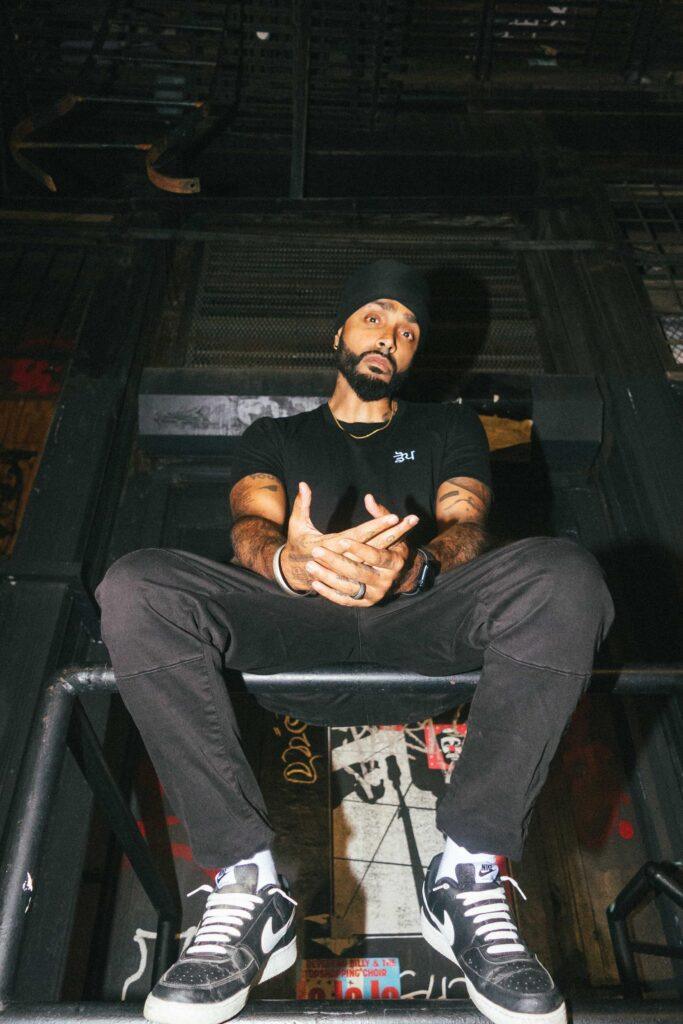
Inkquisitive has built his career by staying true to himself. In a world where it’s easy to chase trends, algorithms and attention, he has always created work that feels genuine, personal and deeply considered. There is an honesty to his art that people connect with because it comes from a real place.
Behind the globally recognised name is Amandeep Singh, an East London artist whose creative story began long before social media, sold-out exhibitions and international audiences. It began at home, with a father who worked for the Indian High Commission and had learned the discipline of calligraphy in Punjab. Amandeep remembers watching him create formal invitations for dignitaries, including members of the Royal Family, and trying to imitate the movement of his hand. He admits that his own early attempts were far from perfect, but the fascination had already taken hold. The idea of ink flowing from a pen, controlled by the movement of the hand, became something he never let go of.
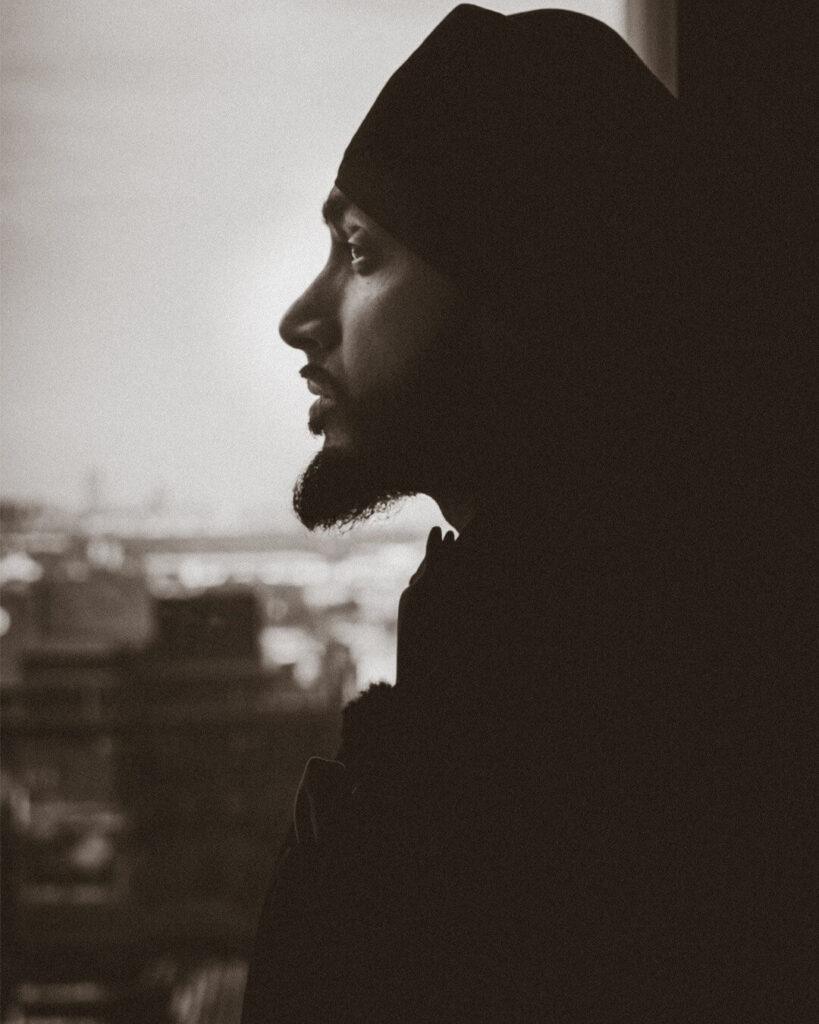
That instinct developed into study, discipline and eventually a career. Amandeep completed a diploma, a degree and later a Master’s in Children’s Illustration, building a foundation that would allow him to experiment across traditional linework, digital illustration and the vivid contemporary style now associated with Inkquisitive. Yet technique has never been the sole purpose. His work is not created simply to be visually impressive. It is designed to deepen the mystery.
Viewers frequently tell him that they have found faces, symbols or hidden details in pieces where none were intentionally placed. He enjoys those moments because they prove that the artwork has activated something within the person looking at it. For Amandeep, imagination is not reserved for professional artists. It is something most people naturally possess as children, before life teaches them to put the pen down. Through Inkquisitive, he gives people permission to pick that imagination back up.
This philosophy is inseparable from his identity. As a Sikh Punjabi artist, Amandeep draws deeply from a history shaped by courage, resistance and service. His artwork celebrates faith, but it also reaches beyond any single community. He speaks often about humanity as one family beneath the same heavens and stars. Where the Sikh Gurus stood against injustice with a sword, he says he does so with a paintbrush. It is an arresting line, but more importantly, it captures the intention behind the work. His canvases are not neutral. They speak about oppression, belonging, spirituality, grief, hope and the responsibility to stand beside those whose voices are overlooked.
One work in particular became a turning point. ‘King Without a Crown’, his contemporary depiction of Guru Gobind Singh Ji, challenged expectations and provoked strong reactions when it first appeared. Some questioned whether such a revered figure should be interpreted in a modern visual language. Yet beneath what Amandeep describes as ‘controlled chaos’ lay a carefully considered narrative, with small elements reflecting moments from the Guru’s life. The piece introduced Sikh art to new audiences and brought Inkquisitive global recognition. More than that, it showed that tradition and innovation could occupy the same canvas without one diminishing the other.
That willingness to create honestly has not always been comfortable. As his audience grew, so did the scrutiny. Amandeep has received overwhelming support, but also hostile comments and even threats. He has learned that no artist can control every interpretation. One person may see courage where another sees provocation. One may connect with the precise shade of a colour while another rejects the entire piece. The only sustainable response, he believes, is to keep painting from the heart.
His commitment to human creativity has also become more pronounced in an age increasingly shaped by artificial intelligence. Inkquisitive has evolved through several visual styles, moving from detailed linework into digital processes such as Procreate, but he is clear that the work remains his. Fifteen years of imagination, study and lived experience cannot be generated overnight. Technology can mimic appearance, but for Amandeep it cannot recreate the human heart that gives art its meaning.
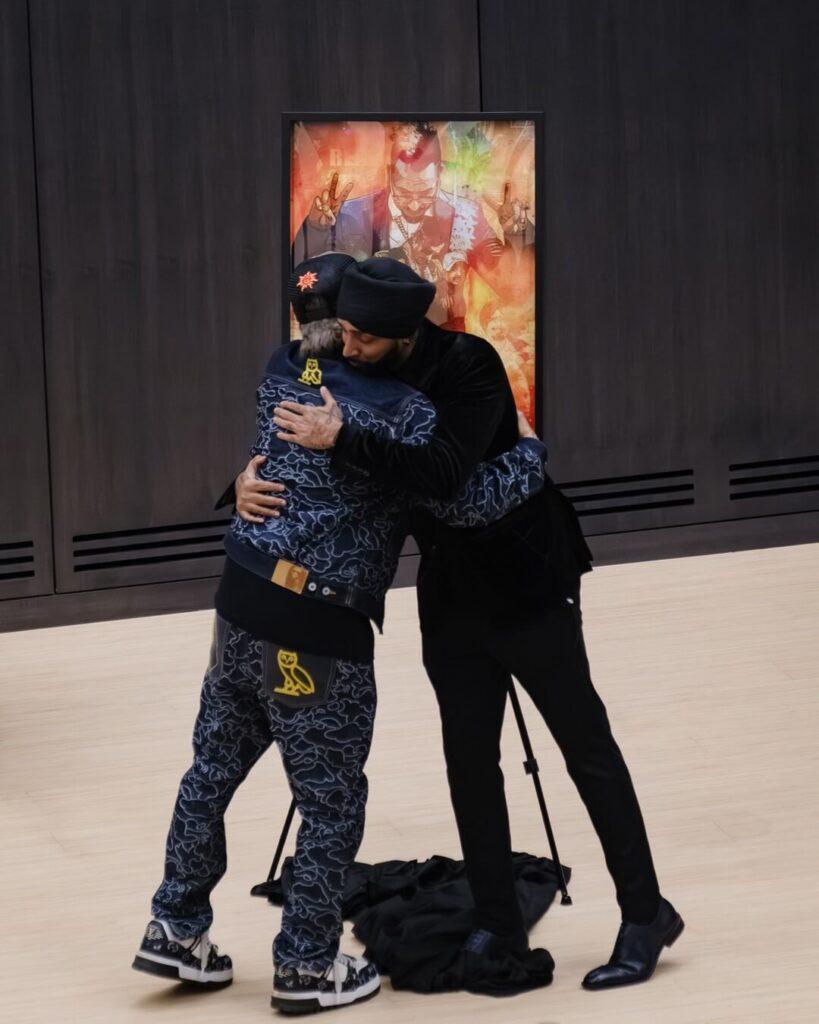
The live tour, ‘An Evening with Inkquisitive’, arrives as both a celebration and a homecoming. Having travelled through almost fifteen cities to mark fifteen years of work, the experience brings together approximately fifty to sixty pieces, new collections, storytelling, special performances and a more intimate portrait of Amandeep himself. It is not simply a chance to see Inkquisitive’s artwork enlarged and in person. It is an invitation to understand the life behind it.
The partnership with Khalsa Aid feels especially significant. Long before Inkquisitive had a large following, Ravi Singh and the organisation were among the first to publicly champion his art. Their support introduced his work to thousands of people, and over the following decade the relationship developed through exhibitions, auctions, donations and shared humanitarian values. A sold-out New York exhibition drew around five hundred people while helping raise funds for the charity. For Amandeep, the connection is rooted in more than visibility. It is grounded in a shared belief that race, religion and background should never stand in the way of compassion.
Ultimately, the tour is not about telling audiences what they must feel. Amandeep would rather each visitor leave with one detail that belongs to them: a painting, a sentence, a colour, a memory or a moment of courage. He does not measure the evening only by sales. The greater achievement is connection. If someone walks away carrying a small part of his story, then the artwork has done its job.
There is more still to come. His Master’s in Children’s Illustration has already fuelled speculation about a future book, while other projects remain deliberately under wraps. Yet alongside the ambition is a quieter personal wish. After months of travelling, Amandeep wants time to be a husband and father, to notice his daughter’s small milestones and recover the childlike wonder that adult life so easily buries.
Perhaps that contrast best explains Inkquisitive: the large-scale exhibitions and the private family moments, the warriors and the vulnerable captions, the darkness and the light. Amandeep does not deny heartache. He transforms it. He wants to be remembered as an artist who used tragedy to deepen his work rather than silence it, who found beauty within struggle and hope within what first appeared hopeless. In that sense, every piece is more than an image. It is evidence that pain can be reshaped into purpose.
| “My Gurus stood against injustice with a sword. I do the same thing, but I do it with a paintbrush.” |
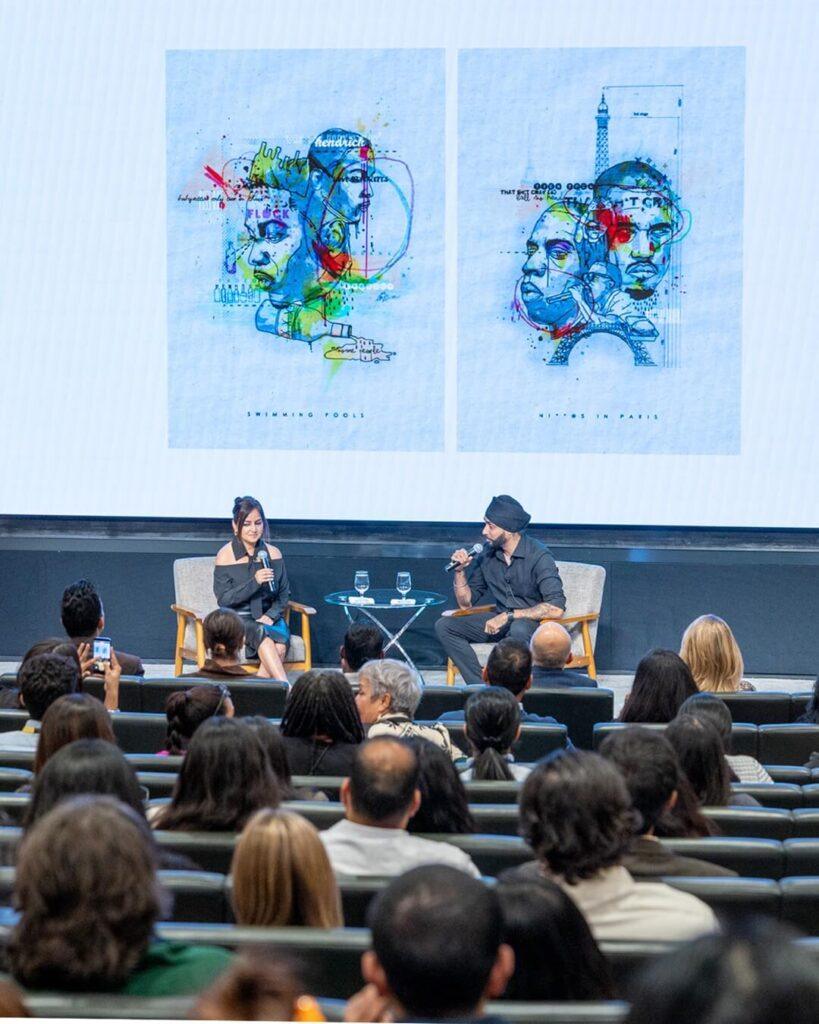
In Conversation with Inkquisitive
For readers discovering Inkquisitive for the first time, who is the man behind the name, and where did the journey begin?
My name is Amandeep Singh and I go by the artist name Inkquisitive. The journey really began with my father. He worked for the Indian High Commission and practised calligraphy, creating invitations for dignitaries and members of the Royal Family. He had learned the craft in Punjab, and as a child I would constantly try to copy him. I was terrible at first, but my hand was in motion and I became fascinated by the idea of ink flowing from a pen. I never let go of that feeling. From there, I completed my diploma, degree and Master’s, began sharing my work online, and the rest is history.
Your work is visually striking, but it also carries layers of poetry, symbolism and storytelling. What do you want people to experience when they look at it?
I love the idea of deepening the mystery. I never want to create something only because it is visually beautiful or easy on the eye. I want the viewer to be drawn in and to find something about themselves within it. People often tell me they have spotted faces or hidden details that I did not deliberately put there, and I find that fascinating. It reminds me that everyone is an artist. As children, we naturally pick up a pen, paint and draw, but somewhere along the way many people stop. My work allows them to use that imagination again. Storytelling is a beautiful thing, and hiding elements within the work helps people create their own relationship with it.
Your Sikh Punjabi identity is central to much of your work. Why is preserving and reinterpreting that history so important to you?
Being a Sikh Punjabi means coming from an incredibly rich history, full of warriors, sacrifice and courage. I feel it would be a crime not to put that on canvas. We can never forget our history because, if we do, there may be nobody left to share it. My Sikh Gurus stood against injustice with a sword. I do the same thing with a paintbrush. That is why I represent humanity and faith, and why I stand with the oppressed and against tyranny. Under the heavens and stars, we are one family. People can forget that, so my artwork is one way of reminding them.
Which piece of work changed your life or made you realise Inkquisitive was reaching people on a global scale?
‘King Without a Crown’ changed my life. It was the first time, to my knowledge, that somebody had depicted Guru Gobind Singh Ji, the tenth Sikh Guru, in that particular contemporary style. It became my most iconic piece and brought worldwide recognition. At first there was criticism, with some people questioning how I could portray Guru Ji in that way. But when you look closely, the splashes and details are very controlled. I call it controlled chaos. Small elements throughout the image tell the story of Guru Ji’s life. It allowed me to introduce Sikh art in a new, contemporary manner, and it will always remain very close to me.
In a culture of constant content and short attention spans, do you think we have lost the ability to pause and feel?
I do think we have lost some of that ability. There is so much happening in the digital world that emotionally responding to something can feel underrated. I still love the traditional experience of standing in front of artwork and feeling as though you are entering another person’s mind. The fact that galleries and exhibitions continue to sell out shows that people still want that human connection. There is so much beauty in life when we stop and take the time to reflect on what is around us.
What has been the most difficult part of building a career as an artist?
Creative blocks are always difficult, but criticism can be just as challenging. You might receive a thousand encouraging comments and then one deeply negative message or even a threat. You have to develop thick skin. I create from the heart and never intend to offend or disrespect anyone, but people can distort a narrative and interpret it in their own way. You can paint the sun yellow and somebody will say it is too orange. You can paint the grass green and somebody will say it is too green. No matter what you do, somebody will have an opinion. The best thing you can do is keep painting.
Your work has evolved from traditional linework into several digital styles. How do you embrace change without losing authenticity?
Evolving has been an important part of my work. My earlier style was heavily based on linework, then I combined that with Procreate and explored how my work could translate digitally. Developing different styles allowed me to connect with different audiences, including people who prefer traditional artwork and others who respond more to digital pieces. What matters to me is that none of it is AI. I have spent fifteen years building this language and using my own imagination. A robot does not have a real heart in the way a human being does, and that human emotion is central to my work.
Khalsa Aid supported you very early in your journey. How did that relationship develop into the collaboration audiences see today?
Khalsa Aid has always been at the forefront of standing against injustice. Ravi Singh was one of the first people to take an interest in my work. At the time I only had around two or three hundred followers, and he shared my artwork with thousands of people through Khalsa Aid. Suddenly, a wave of people discovered what I was doing. Since then I have always tried to give back through donations, auctions and exhibitions. We have built a beautiful collaboration over more than a decade. In New York, we held a sold-out exhibition with around five hundred people, and proceeds supported Khalsa Aid’s humanitarian work. I know that money is being used to serve people, which makes the partnership especially meaningful.
What can audiences expect from An Evening with Inkquisitive?
I cannot reveal everything, but there will be special performances, a guest appearance and a presentation of artwork. Above all, people will learn about Amandeep, not only Inkquisitive. They will hear the story of an East London child who loved to paint and draw, faced many hardships and is still here celebrating fifteen years. There will also be a new collection and around fifty to sixty pieces on display, so it is a full journey through the body of work.
What changes when people encounter your work in person rather than through a screen?
People often tell me that seeing the work up close is completely different from seeing it on social media. The scale, colour and detail have a much stronger impact. Beside the artwork, I also include captions that explain the story or deepen the mystery. Sometimes people connect just as much with the writing as they do with the image because the words are transparent and vulnerable. I am not afraid to share emotions around loss, tragedy or happiness. That honesty helps people relate the work to their own lives, and art can become an escape or a way of processing something difficult.
Your work explores different religions and cultures. How does that connect with Khalsa Aid’s humanitarian mission?
I strongly believe in working together as humanity. We bleed the same. Sikh teachings remind us to treat everyone with respect, regardless of religion, race or the God they worship. That is also reflected in my artwork. I can create pieces inspired by Islam, Christianity, Hinduism or Jesus Christ because I want to learn and offer my style to different audiences. We need to be more open-minded. That belief aligns naturally with Khalsa Aid and its mission to make the world a better place.
What do you hope each person takes away from the tour?
I simply hope they take something. It might be one painting, one moment in the presentation, something I have said, a colour combination or a final paragraph from a caption. It does not have to be the same thing for everyone. I always say that I do not need every artwork to be purchased. Of course, selling a piece is wonderful, but the deeper reason for doing this is to allow people to enter my personality and share that journey with me.
After almost fifteen cities and fifteen years of Inkquisitive, what are you looking forward to next?
There is a lot to look forward to and I have been working secretly on several things. I completed my Master’s in Children’s Illustration, so there are rumours that a book may be coming. Creatively, I am always locked in and will always be working on something. Personally, after the world tour, I am also looking forward to simply being a dad and a husband. The small things my daughter does, such as calling me dad, walking or running, carry enormous value. Her childlike innocence reminds me not to take life too seriously.
When people look back on Inkquisitive, how would you like the work to be remembered?
I would love people to remember an artist who used heartache to improve his art. Instead of allowing tragedy to stop me from picking up a pen, I tried to flip it and use that pain to soften the blow. There is beauty in struggle. I have always tried to show tragedy in a different light, where even in darkness there is a small amount of hope. That would be a beautiful way for Inkquisitive and the artwork to be remembered.
The Art of Finding Hope
Inkquisitive’s story is not one of creativity detached from life. It is creativity shaped by it. The work carries the imprint of family, faith, cultural memory, criticism, loss and the stubborn decision to continue. That is why it resonates beyond the visual. Each piece asks the viewer to participate, to bring their own history and imagination into the space between what the artist intended and what the audience discovers.
As Amandeep celebrates fifteen years, the achievement is not simply that Inkquisitive has endured. It is that the work has remained recognisably human. In a changing creative landscape, his insistence on emotion, authorship and lived experience feels increasingly important. The brushstrokes may be controlled, the compositions deliberate and the colours vivid, but the heart of the work is vulnerable.
An Evening with Inkquisitive offers audiences the chance to see that journey at full scale. It is a celebration of the paintings, but equally of the boy who once copied his father’s calligraphy, the artist who refused to be silenced by criticism, and the father now learning again from his daughter’s sense of wonder. Above all, it is a reminder that darkness and light do not always exist separately. Sometimes, the most powerful art is created precisely where they meet.
Credits:
Harbir Bassi – @harbirbassi
Balzinder – @balzinderbalz
AWorkInProcess – @aworkinprocess_