My Vitiligo Journey: From Silence to Empowerment
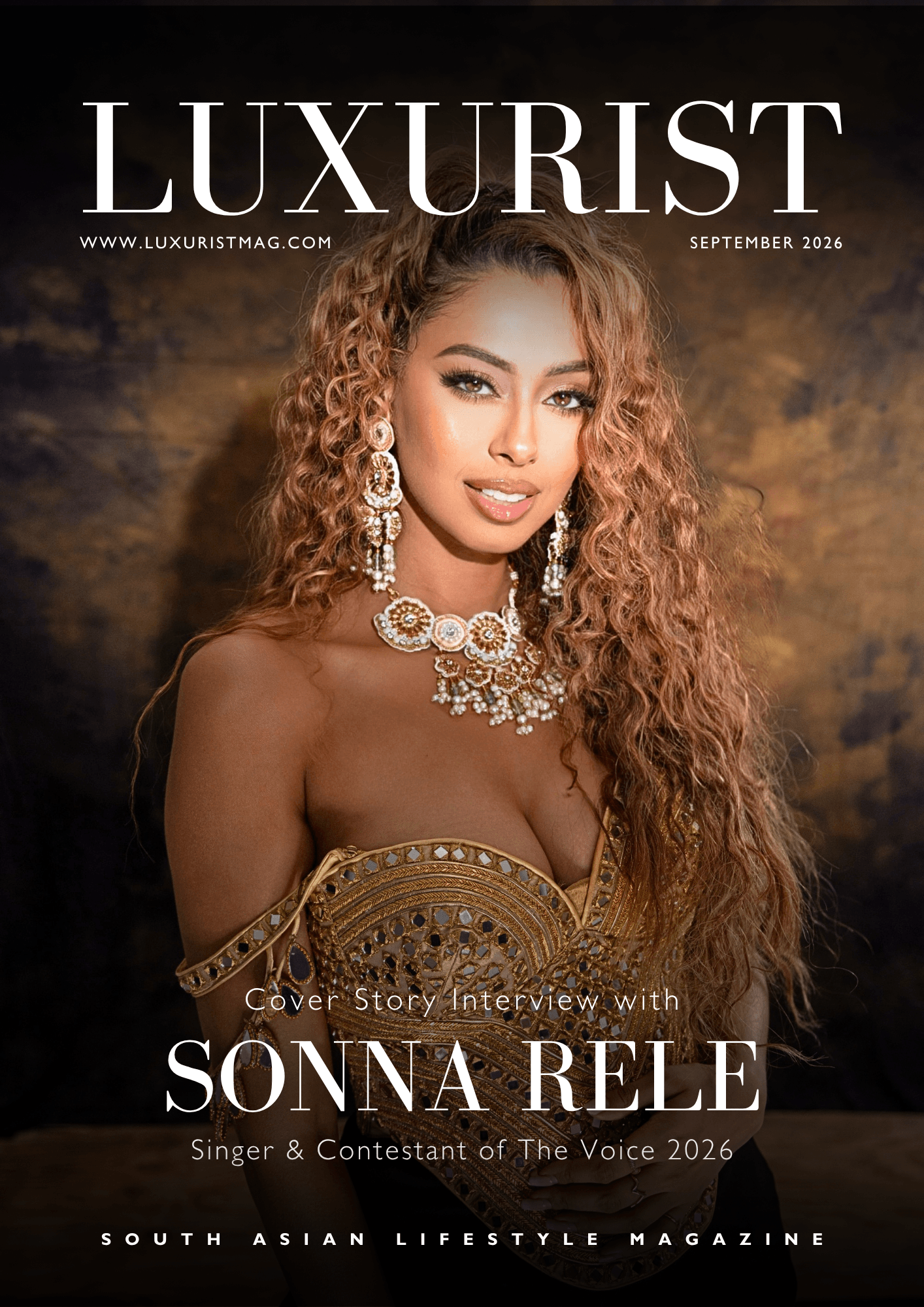
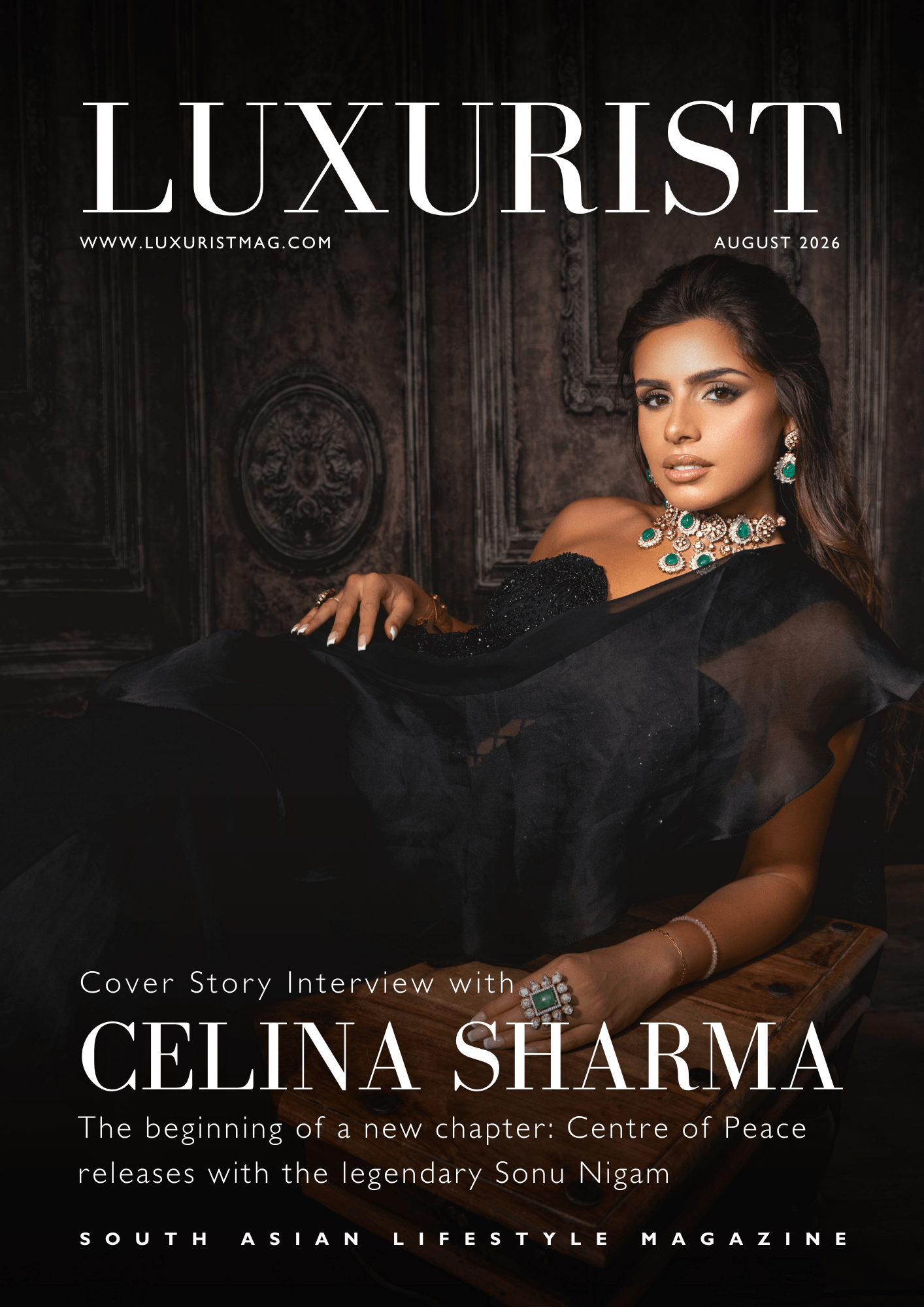
This year marks my 17th World Vitiligo Day, taking place on 25th June 2026. It is a powerful moment in the global skin community where people come together to raise awareness, share lived experiences, and celebrate visibility in all its forms. As a South Asian woman living with vitiligo, I was honoured to be invited by Luxurist Magazine to share my story on this significant day.
Vitiligo is a long-term skin condition in which patches of skin lose their pigment due to melanocytes, the cells responsible for producing colour, stopping their function or being destroyed. It is widely understood as an autoimmune condition, where the immune system mistakenly attacks healthy pigment cells. But beyond the definition, vitiligo is deeply personal. It affects identity, confidence, and how you move through the world and this is exactly what I experienced during two decades of my life.
Many people who I meet today assume I was I was born with vitiligo, but I was not. I was diagnosed at 21, and that moment changed the direction of my life completely.
I was born and raised in South London in a supportive family environment. I was confident, outgoing, and academically driven, going on to study Hispanic Studies with French at university. My studies took me to Granada in Spain for a year abroad an experience that shaped my independence and love of culture. I was also excited by taking a pathway that wasn’t the South Asian norm of becoming a doctor, dentist etc and really pursuing my love for languages.
It was towards the end of that year in 1999 when I first noticed a small white patch on my arm. I assumed it was sun pigmentation or skin discoloration that would eventually go. But upon returning to the UK, I was diagnosed with vitiligo by my GP and told there were only two options: leave it untreated or begin PUVA treatment at Kings College. Of course I wanted this treated, so I started some intense PUVA (Psoralen light treatment that encourages repigmentation of the white patches)
At 21, I could not yet comprehend what that diagnosis would mean for my future but knew I would go ahead with the treatment try this one opportunity that would mean I could get rid of the white spots
I still remember the first time it appeared on my face. That moment marked the beginning of withdrawal and isolation. I didn’t understand the connection between stress and progression at the time, but I began to notice a pattern which was that the more anxious I became, the more it spread. What followed was a period of deep emotional struggle and battle within myself where I was losing the ability and will power to stay positive. I kept noticing more patches appear and the more that appeared the more I started to resent this situation I was in.
As a South Asian woman, there was an added cultural pressure. Visible difference is still often misunderstood, and I had never seen anyone in my family with vitiligo. Although I had always been confident, I began to lose that sense of self. I experienced depression and turned to anything I thought might help, from herbal remedies to strict concealment routines. For years, I used theatrical makeup daily, believing that hiding my skin would make life easier than explaining it. When the PUVA treatment didn’t work, in pure desperation I tried Chinese treatment, Indian treatment together with avoiding a variety of foods in the hope that my pigment would reverse but sadly none of these worked.
As vitiligo spread from my arms to my face, legs, and feet, so did the effort required to hide it. I graduated in 2001, began a career in banking, got married, and reached significant life milestones but the constant need to cover up never stopped. Long sleeves in summer. Carefully planned outfits. Makeup routines that took hours. I hid my vitiligo from the world and only my husband and immediate family at the time knew I had the condition. Vitiligo didn’t just change my appearance, I lost my confidence, my spontaneity, and in many ways, my cultural identity.
Social events became emotionally exhausting. Every occasion required preparation not just for what I would wear, but for how I would hide Vitiligo from my personal world.
At one point, I underwent steroid injections, which initially gave some positive results. However, I had to pause my treatment when I became pregnant with my daughter in 2010. Instead of joy alone, I experienced conflict and the feeling of I was finally “getting back to myself,” only to have treatment interrupted. After her birth, the vitiligo progressed again. But something else shifted too: exhaustion and motherhood meant I no longer had the same energy to keep hiding my skin nor continue with the steroid treatment. Slowly, I began to realise I could no longer live my life entirely hiding away. For years, only my husband, immediate family, and a small circle of friends had seen my skin uncovered.
A major turning point came in 2016 when I participated in a BBC documentary without covering my vitiligo. That moment marked the beginning of reclaiming visibility.
From there, I founded Positively Diverse, building a platform to support others and challenge perceptions around visible difference. You can learn more about my work at www.positivelydiverse.co.uk, where I continue to share resources, stories, and lived experiences, alongside my conversations on Facebook/Instagram (handle @positivelydiverse). I realised there was a real need to help others when many people globally started to connect with me and share the difficulties they were facing. Some would talk about the frustration with the skin condition, others just needed someone to listen to them. I knew I wanted to do more to support people.
Today, I no longer feel the need to hide my vitiligo. That journey took years of emotional work and inner healing and it was not instant acceptance, but a gradual rebuilding of confidence that for me took little steps to get to where I am now.
I now choose whether or not to wear makeup. I no longer organise my life around covering up my skin.
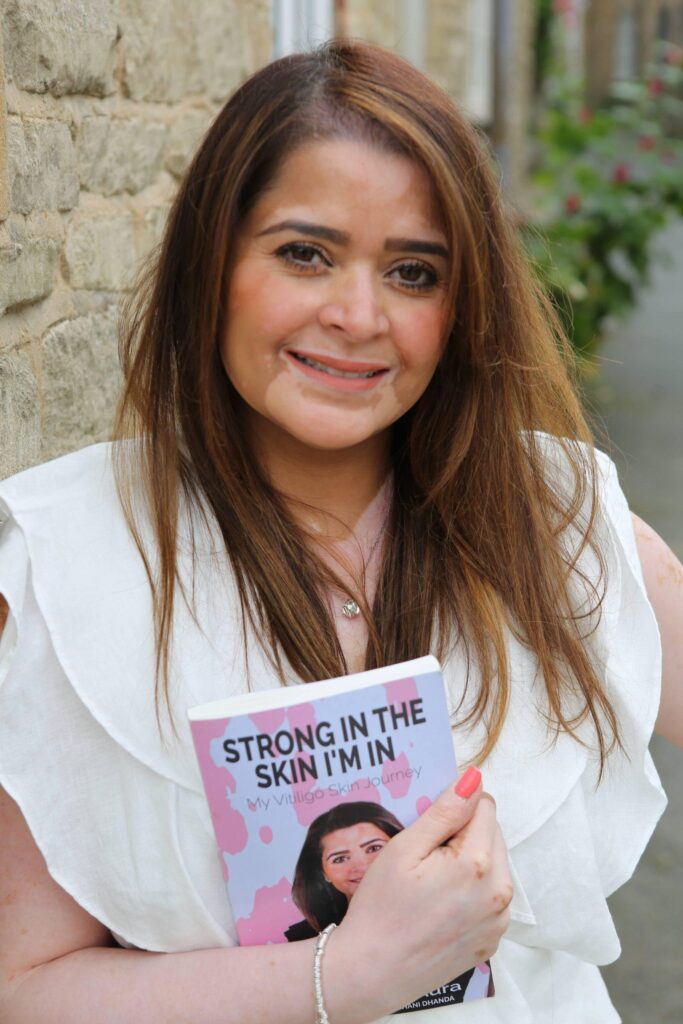
Alongside my advocacy work, I have written my memoir Strong in the Skin I’m In, available on Amazon and also Kindle, where I share my full lived experience in detail. My work over the years has also expanded into media and presenting. I have presented for BBC News and Metro, and was recently featured in Grazia. I am also a campaigner for the charity Changing Faces and recently worked on a powerful “Think Before You Speak” campaign, which challenges the impact of language and encourages greater awareness around visible difference. This campaign was particularly meaningful to me, as it reflects so much of what I have experienced personally how quickly words and assumptions can affect confidence, identity, and self-worth.
I also work as a secondary school Spanish teacher, which remains one of my greatest passions, allowing me to empower young people and encourage confidence in the next generation.
One of the most meaningful developments in my journey has been creating spaces for others. I recently hosted my first London event, Coffee, Conversation & Connection, bringing together women who have experienced isolation in different forms. The response was incredibly powerful and emotional. While social media offers connection, it does not replace the depth of in-person human interaction, especially when someone is feeling alone. The feedback from the event was incredible still highlighting the need for in person connections in our modern day social media world when battling a visual difference.
This event was created from my own lived experience of isolation at 21, and my desire to ensure other women do not feel they have to navigate that experience alone. I am now focused on growing this initiative further, building safe, welcoming spaces for women who may not feel they have anywhere else to be seen, heard, or understood.
I am deeply proud of my South Asian heritage, but I also believe we must continue to evolve in how we respond to visible difference. There is still a need for greater empathy, awareness, and education. Too often, people feel entitled to comment without considering the impact of their words. People are now confused when they see me which raises constant questions about my identity but it certainly opens up the conversation around my vitiligo and allows me to educate and empower others.
Change begins with awareness and the simple act of thinking before we speak. Vitiligo once felt like something that took my life away piece by piece, my confidence, my identity, my freedom.
Today, I no longer live in silence. I am visible, I am connected, and I am no longer defined by hiding. I now live by my personal motto;
Be seen. Be heard. Be you.