There are certain things we have come to associate with a truly luxurious home. The beautifully designed kitchen, the statement lighting, the art, the immaculate joinery, perhaps a dressing room that makes getting ready in the morning feel like a visit to a particularly lovely boutique. We will happily spend months debating marble, taps and precisely which shade of off-white is sufficiently different from the other seven shades of off-white. And then there is the front door.
It is arguably one of the most important pieces of the entire house. It is the first thing a guest sees, the thing that sets the tone for everything beyond it and, crucially, the barrier between everything we value inside our homes and the outside world. Yet for years, security has been something homeowners have tended to think about afterwards. Cameras go up. Alarms are installed. Locks are upgraded.
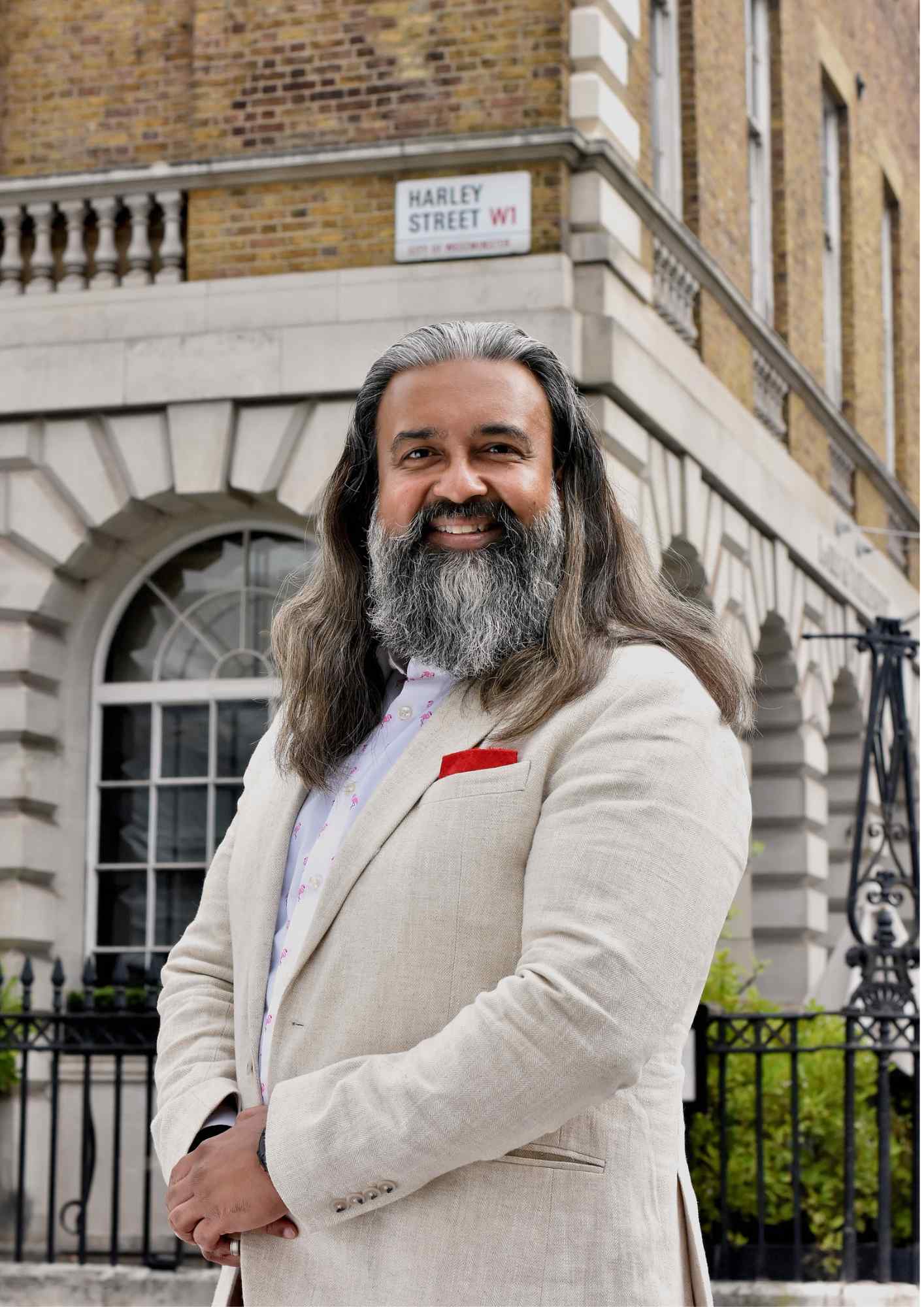
So when we caught up with Neehal Pala of Y Secure, a specialist in bespoke steel entrance doors and high-end residential security, we wanted to know whether that thinking is beginning to change. Can you create a genuinely high-security home without making it feel like one? And, perhaps more intriguingly, are we reaching a point where feeling completely safe at home is becoming a luxury in itself?
When the Front Door Becomes Part of the Architecture
The idea of luxury has changed. It is still about beautiful things, of course, but increasingly it is also about how a home makes us feel. Privacy is luxurious. Convenience is luxurious. And being able to close the door at night and feel genuinely protected is arguably one of the greatest luxuries of all.
The problem, as Neehal explained, is that traditional ideas of serious home security aren’t particularly attractive. Mention a high-security door and most of us picture something belonging to a bank vault rather than the entrance to a beautifully designed family home.
But it doesn’t have to be that way.
What fascinated us about Y Secure’s approach is that the security engineering can largely disappear behind a door designed specifically for the property. The company specialises in bespoke steel entrance doors, with the design tailored around the individual home rather than homeowners being restricted to an off-the-shelf solution.
There is an enormous difference between choosing a front door from a catalogue and designing an entrance around a house. Is it a contemporary architectural home where an oversized minimalist entrance would work beautifully? A period property where anything too modern would immediately feel wrong? Is there glazing surrounding the doorway? Should the entrance almost disappear into the façade or become its defining feature?
Solid steel construction can sit behind bespoke panels, glazing, finishes and ironmongery, allowing the visible part of the entrance to work with the architecture rather than fighting against it. Y Secure’s wider range includes modern and traditional designs, alongside different locking systems, colours and hardware.
And this is where luxury security becomes much more interesting.
Why should a homeowner have to make the depressing choice between the beautiful door and the secure one?
If you are commissioning something specifically for your home, surely it should be both.
The Clever Stuff You Don’t See
Of course, we couldn’t talk to a security specialist without wanting to know about the clever bits hidden underneath.
Because while we may be admiring the finish, proportions and handle, the real reassurance comes from what the door is actually doing.
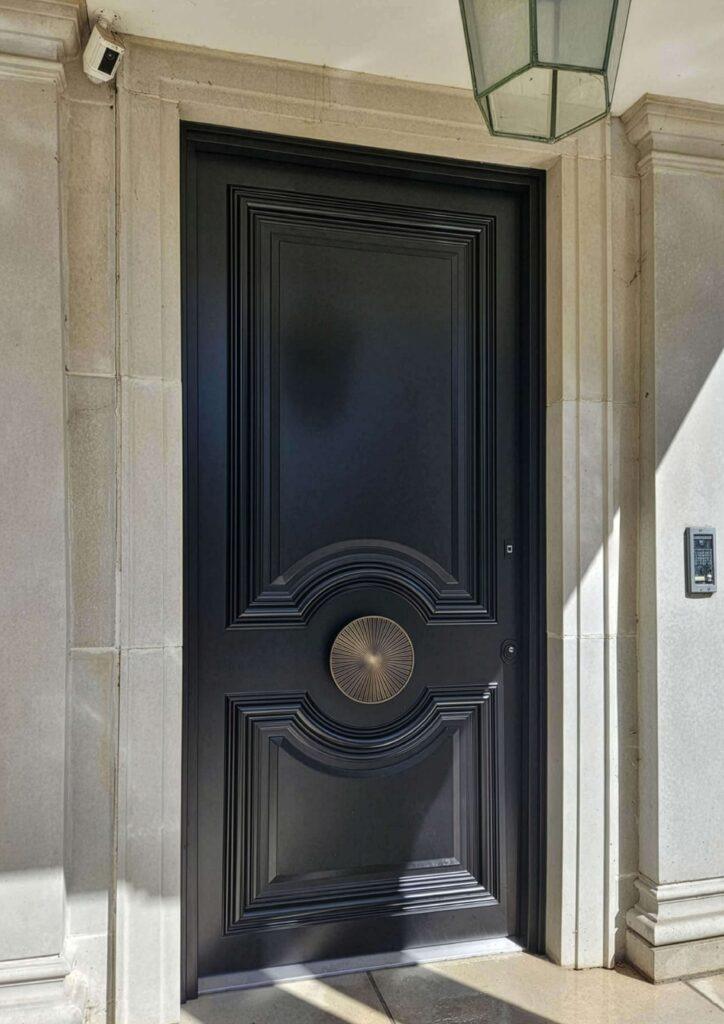
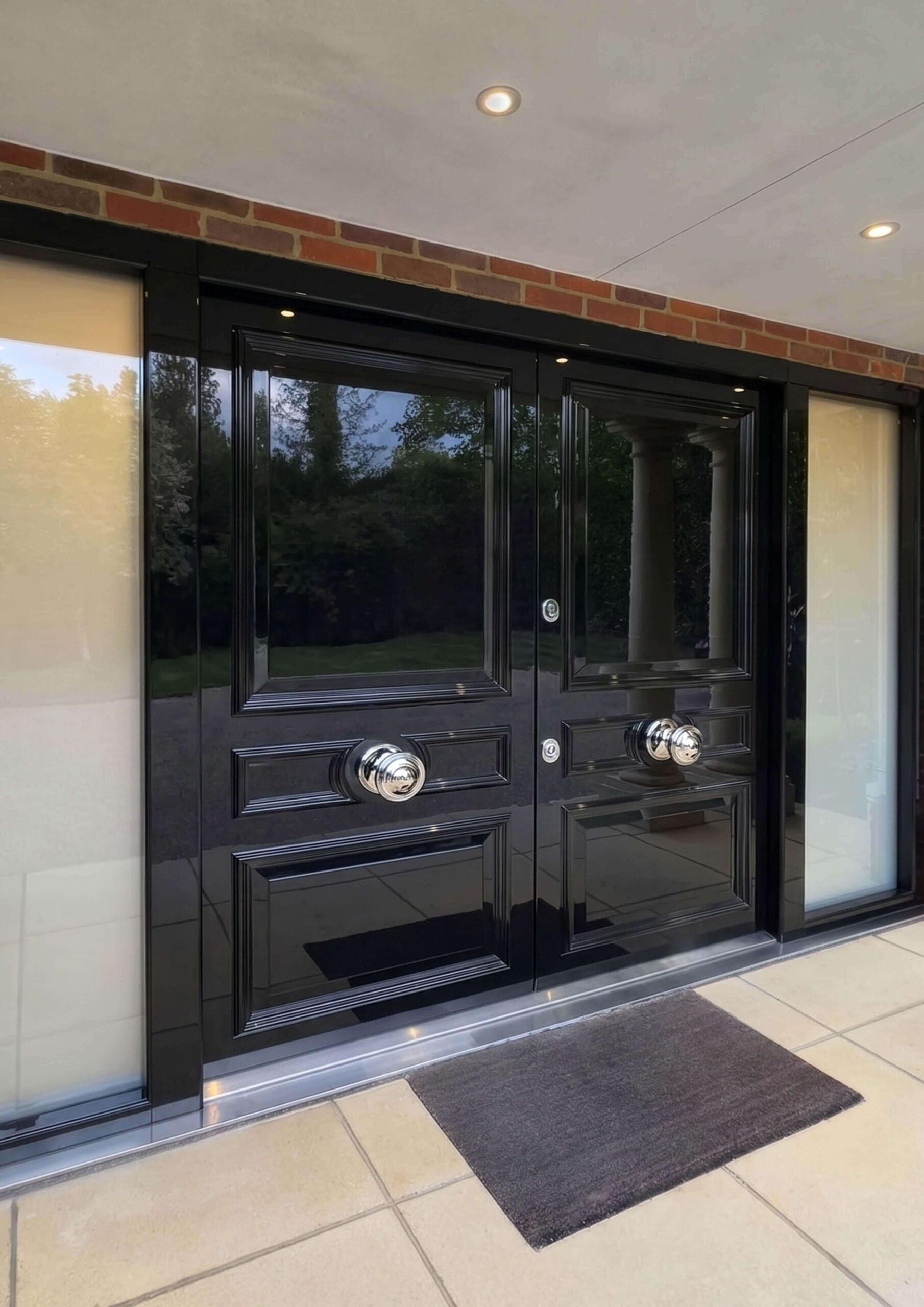
Y Secure works with high-security locking systems and modern security technology as part of its bespoke residential solutions, with the precise specification considered around the individual property and homeowner rather than applying one universal solution to every house. Security glazing and burglar-resistant windows can also be incorporated into a wider scheme where homeowners want light and architectural openness without abandoning security considerations.
There is something rather appealing about this version of technology because it is not there simply to demonstrate how technologically advanced the house is.
Good technology should make everyday life easier. You arrive home, gain access and carry on with your evening while a considerable amount of engineering gets on with its job behind you.
That, increasingly, is what good luxury design looks like.
The cleverest part of the product doesn’t necessarily need to be the loudest.
And Then Neehal Mentioned Panic Rooms…
Naturally, this was where our ears pricked up.
Because panic rooms, or safe rooms, still sound faintly like something belonging exclusively to Hollywood celebrities, billionaires and people whose houses appeared on MTV Cribs.
But they are increasingly part of the conversation around security in high-value residential properties. Y Secure designs panic rooms as protected areas within the home, generally with controlled access and construction intended to provide occupants with a place of safety during a serious security incident.
The principle is actually surprisingly straightforward. If the perimeter of a property is breached, there is somewhere within the house where the occupants can retreat.
And the door is obviously rather important.
A panic-room door performs a completely different function from an ordinary internal door because it forms part of the protective barrier around that space. Its construction and security specification therefore need to reflect the property and the level of protection required.
But we immediately had another question.
What happens when your beautifully designed bedroom, dressing room or hallway suddenly acquires something that looks as though it has been borrowed from Fort Knox?
Apparently, it doesn’t have to.
The Most Luxurious Security May Be the Security Nobody Notices
This was perhaps the most interesting part of our conversation with Neehal.
One of the most sophisticated ideas in residential security is discretion.
If a secure-room entrance sits within a bedroom, dressing room, hallway or another beautifully designed part of the house, visually it still needs to belong there. The finishes, hardware and detailing can therefore be considered alongside the surrounding interior rather than security having an entirely separate visual language.
There is something inherently luxurious about that.
We are increasingly seeing the same philosophy throughout high-end homes. Speakers disappear into ceilings. Lighting systems work almost invisibly. Heating is controlled without rows of thermostats. Technology is there when you need it and almost disappears when you don’t.
Why shouldn’t security follow exactly the same philosophy?
The strongest-looking door is not necessarily the strongest door. And the most secure-looking house is not necessarily the most secure house either.
Perhaps the ultimate expression of luxury security is that your guests would never know it was there.
Bespoke Should Actually Mean Bespoke
The word “bespoke” has suffered slightly from overuse in the luxury industry. Change a handle and choose from six colours and suddenly something is described as bespoke.
Talking to Neehal, however, highlighted why genuine customisation matters when the product in question is responsible for protecting the people inside the house.
Y Secure’s process begins with understanding the property and the homeowner’s requirements rather than simply recommending the same solution to everybody. The company describes its service as covering the journey from consultation through to installation, with different security solutions selected according to the circumstances of the individual home or business.
That makes sense when you think about it. Two homes of similar value may have completely different architecture, layouts, entrances and vulnerabilities. The answer cannot always be the same security product dressed up in a different colour.
And for something as tactile and visible as a front door, seeing it properly matters. Y Secure has showrooms in Hatch End and Beaconsfield, allowing clients to see products, materials and designs in person before making decisions about their own homes.
So, Should We Be Spending More on Our Front Doors?
This was the thought we were left with after speaking to Neehal.
We think nothing of allocating significant budgets to kitchens that may eventually be replaced, technology that will become obsolete or furniture that will change as our tastes do. Meanwhile, the entrance to the house has to perform every single day, often for decades. It has to withstand weather and constant use, complement the architecture and, most importantly, protect the people and possessions behind it.
For people building or extensively renovating a property, considering security at the design stage rather than after everything else has been completed suddenly seems rather logical. It means the entrance, glazing, technology and wider security strategy can be considered alongside the aesthetics rather than retrofitted once all the beautiful bits are finished.
And perhaps that is ultimately where our definition of a luxurious home is heading.
Of course we still want the beautiful kitchen. We still want the lighting, the artwork, the dressing room and possibly that completely unnecessary but deeply desirable boiling-water tap.
But the real luxury might be considerably less visible.
It is walking through a beautiful entrance that looks entirely at home within the architecture, closing the door behind you and barely thinking about the technology and engineering hidden inside it.
Because true luxury is the peace of mind that begins when a perfectly crafted door closes.