Motherhood rarely unfolds the way we imagine. For Reena Anand, neurodiversity speaker and founder of Being Inclusive, life as a mother to two autistic sons has reshaped everything she thought she knew about resilience, advocacy and success. In this deeply personal reflection, she shares the quiet realities of parenting neurodivergent children, challenging misconceptions and discovering unexpected strength along the way.
For readers meeting you for the first time, can you tell us a little about yourself and your family
Every morning starts the same way. I wake before everyone else, freshen up, and head downstairs to make my eldest son’s breakfast and my morning tea. I do this deliberately – it’s one of our points of connection before the day takes over. Between 7:00- 7:20, I ask him the same questions I ask every single day: what subjects do you have today? Do you have your PE kit? Is your homework done and packed? Any off-timetable classes? The questions never change, and whilst he’s super bright, his executive functioning skills aren’t commensurate with his age so he needs the prompts. It’s definitely one of many things that people would never know is an area where he requires support.
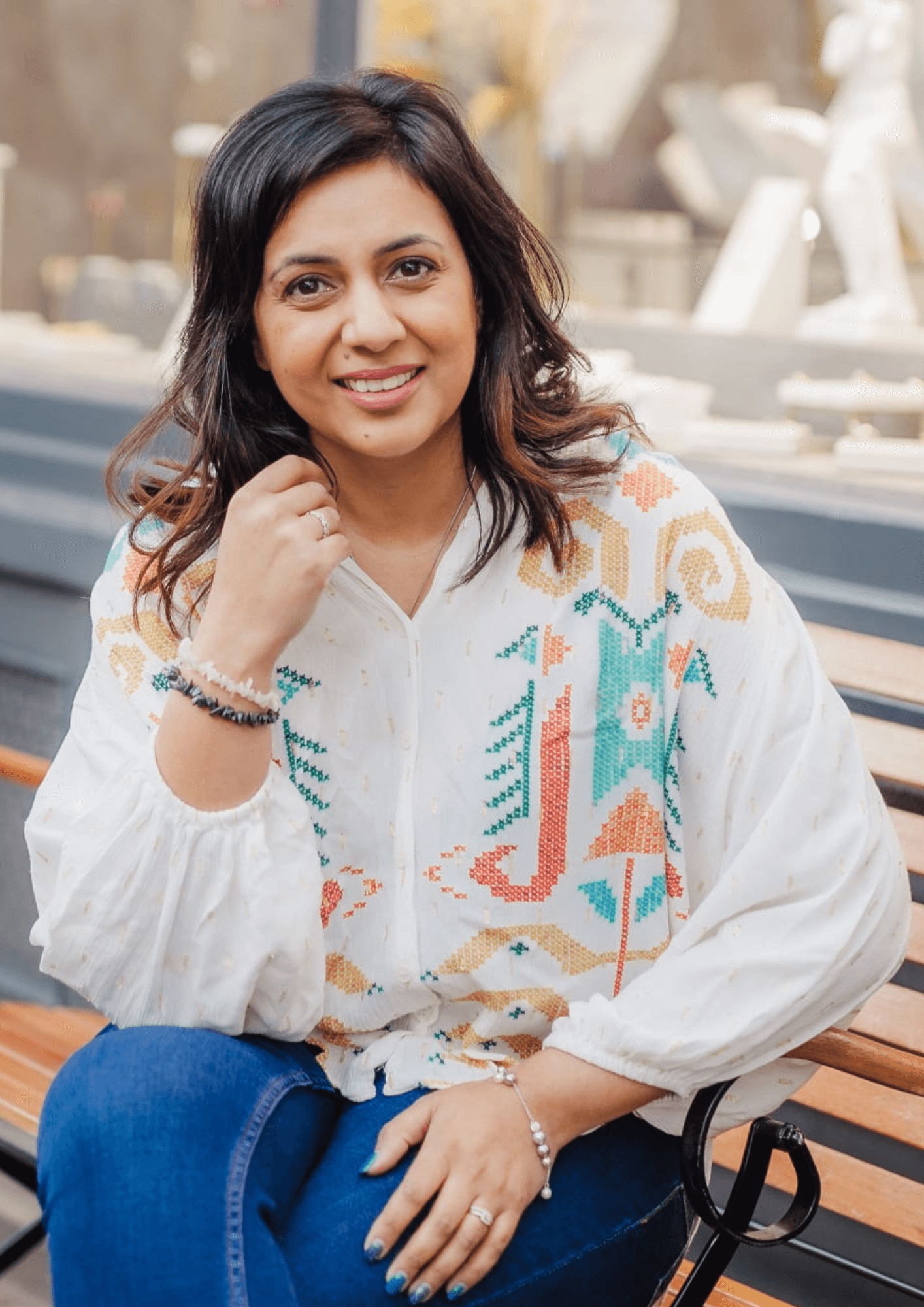
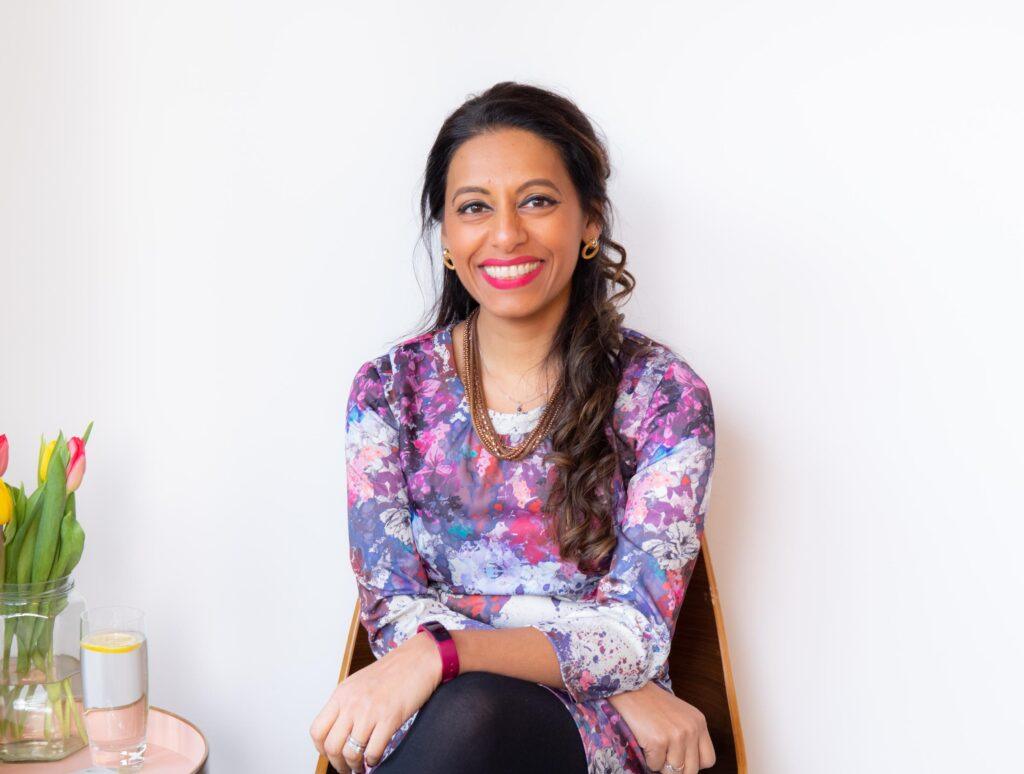
I am a neurodiversity speaker and qualified coach, and the founder of Being Inclusive; a consultancy that delivers training on neurodiversity to corporate organisations, and in the education and health sectors. I am also a late-diagnosed AuDHD woman – autistic and ADHD – and a South Asian mother of two neurodivergent sons.
Before I founded my consultancy, I spent 16 years as a practising solicitor and then as an ombudsman, working on cases involving the Equality Act, mental capacity, and reasonable adjustments for some of the most vulnerable people in society. That professional grounding shapes everything I do now, but it is my lived experience as a mother, as a neurodivergent woman, and as someone navigating the intersection of race and disability, that drives it.
Running a consultancy alongside raising two boys who need daily support means life requires constant recalibration. Most weeks involve some combination of client work, advocacy writing, chasing appointments, and being completely present for my sons. It is both full-on and deeply fulfilling; I wouldn’t have it any other way.
When did you first begin to notice that your child might be autistic?
He was our first child so we had nothing to compare him to. He could recite the entire Gruffalo story by the age of two – not just read it, but perform it, acting out every character. His speech sounds hadn’t fully developed yet, but we didn’t connect any of it to autism. We just thought he was a boisterous little boy with bags of personality.
What started to shift things were the calls from the nursery. They had created a red behaviour book – a daily log with smiley and sad faces recording how he had behaved – and there were constant meetings telling us he was unmanageable. He would only play on his terms, directing other children and expecting them to follow. He struggled to sleep and would experience moments of extreme overwhelm. If we went anywhere and had to wait, he would become overwhelmed very quickly. He lined up bricks, toys and trains, but he wouldn’t play with them in the way other children did. With his car track, he would name every single Hot Wheels car and then draw out a detailed parking garage for them to rest in. He was never interested in racing them.
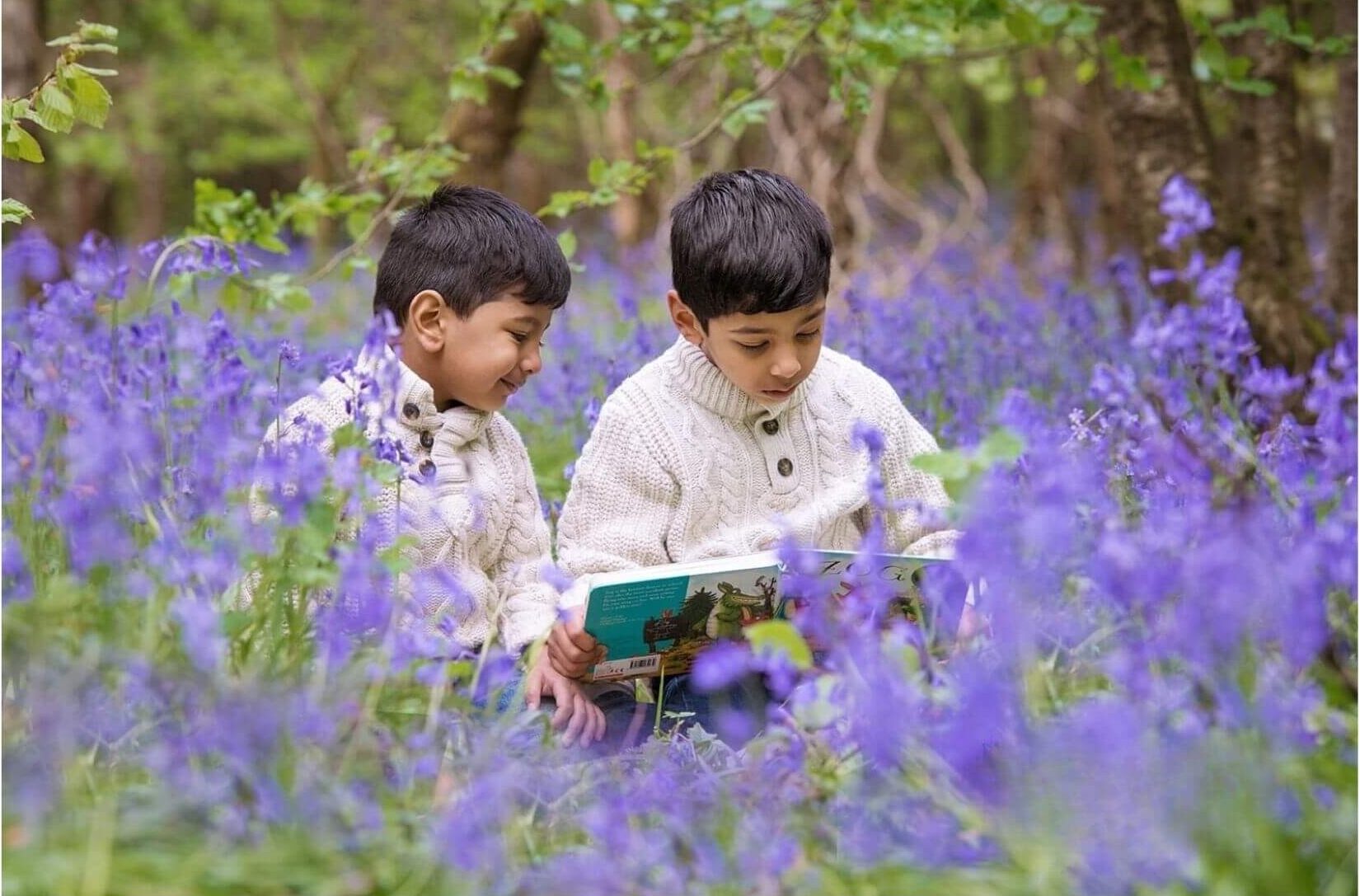
He struggled to make and sustain eye contact and couldn’t look at a camera if we tried to take a picture. He didn’t follow instructions in the way the nursery expected of him such that we took him to an audiologist at one point because we genuinely thought he might not be able to hear properly. The audiologist confirmed his hearing was fine. It was a lot of little things and we didn’t know what was going on nor did we have the language to understand what we were seeing.
What was the journey to diagnosis like for your family?
With my first son, I was fortunate that my employer’s healthcare policy covered a private assessment so we received his diagnosis within four months. That speed was certainly a privilege but the journey was no less painful.
I was completely shell-shocked when the doctor confirmed he was autistic. I had an academic understanding of autism in adults through my work as an ombudsman but I was clueless when it came to children. We sat through the assessment, and at the end, the doctor called us into a room, told us our son was autistic and handed us a leaflet for the National Autistic Society. That was it. When we walked out, my son was bouncing along beside us, endlessly chattering, full of life. My husband and I walked in silence. I remember the questions spinning in my head: What do we do now? Should we tell our family? What will this mean for his life? Will he get married? How long will he live? I know now, how much of that fear came from having no information or context for the condition, but in that moment, I just couldn’t think straight.
With my second son, I had left my job and started my consultancy, so we had to go through the NHS. First I had to convince the school that I believed my son might be autistic; because he was “well-behaved” and not falling behind, they didn’t believe me. So I took him for a private assessment with an organisation that specialised in early screening signs but couldn’t do the actual diagnostic assessment. The report was unequivocal that he was likely both autistic and ADHD. I shared this with the school who then supported my application for a diagnostic assessment. Fortunately, I have a kind GP who, when presented with the report I’d obtained and a letter from the school, made the NHS referral for us. I know many parents who’ve fallen at this hurdle because their GP has refused to do this. It took around a year to get the two assessments done, and it was only fast-tracked because I rang regularly to ask about cancellations and because his needs were considered a priority case. Without that persistence, we would likely have waited two years or more, which was entirely standard at the time, and remains so for many families today.
There is so much information about autism online right now. From your experience, what are some signs that parents should genuinely pay attention to?
The first thing I would say is: be careful with online resources. They tend to show a very narrow picture of autism – often based on a young, white, male child – and that picture misses an enormous number of autistic people, including girls, women, and children from global majority backgrounds.
Many behaviours that are entirely common and culturally grounded in South Asian communities, for example, would technically be flagged as autism warning signs by Western assessment tools. Not making eye contact with an adult, not pointing at objects – these are things some of our children are actively taught as a mark of respect. The tools themselves are not culturally competent, and parents need to know that.
What I would look at instead is how your child regulates themselves. Are they holding everything together at school and then completely falling apart at home? That is often a sign of masking; putting on a performance of being ok in order to fit in, and paying for it behind closed doors. I would also look at their relationship with their senses: are certain foods, fabrics, sounds, smells or levels of light causing real distress, not just a passing preference? And look at how they communicate joy, not just whether they speak, but how they reach for you, how they share what they love.
No checklist will tell you whether your child is autistic. But your knowledge of your child, the gap between how they are in public and how they are at home, and your gut instinct, together will tell you if you should consult a professional.
What do you wish someone had told you earlier in your journey?
I wish someone had told me it was not my fault. For a long time, I carried an enormous amount of guilt. I had a stressful pregnancy with complications and I had convinced myself that I had somehow caused my son to be wired differently. I carried that guilt quietly and alone for years. No-one told me otherwise and I didn’t know enough to dismiss these thoughts. Research actually shows that for the most part, autism is heritable; so it’s likely to have come from the genes of one of the parents.
I also wish someone had told me that our faith community might struggle with it and that, that was their limitation, not ours. I used to take my son to bhajans, and he would always get told off for moving or not sitting still. Elders would tell us we needed to “control” him, that he was disturbing the congregation. Faith is where I would always go for strength and community, and there was a period where I felt I could no longer access that. It was one of the loneliest feelings I have experienced and is also why I now speak so openly with faith communities; there are families across every faith who need God but feel unwanted and judged by the very places that should welcome them.
And I wish someone had stepped in at the nursery. Instead, we were told by the proprietor that in her 20+ years of running the nursery, she’d “never met a child like ours.” She heaped shame and judgement upon us and offered nothing in return; no solutions, no kindness, not even a glimmer of hope. Parents in those early days are so vulnerable. A little humanity can go such a long way.
What misconceptions about autism do you see most often?
The biggest one is that autism looks the same in everyone. It absolutely does not. One of the reasons so many girls, women, and people from global majority communities are missed or diagnosed late is that the image most people carry in their heads – a young, white boy who doesn’t speak and avoids human contact – represents a tiny fraction of actually autistic people. Masking is real; it is exhausting, and it means many autistic people present as managing without any difficulties to the outside world, while struggling enormously beneath the surface.
The other myth that frustrates me is the idea that autistic people lack empathy. My son has more empathy than most adults I know. What is true is that autistic people may express empathy differently or may become so overwhelmed by the feelings of others that it shuts them down. That is not a lack of empathy; it is often the opposite.
And then there is the idea that children grow out of autism, which they don’t. Autistic children become autistic adults and whilst their needs may shift and evolve, their neurotype doesn’t change. The sooner we accept that and build a world that openly values autistic adults, the better.
What are some of the everyday challenges that people might not realise come with parenting an autistic child?
Going back to the morning routine I described earlier, those questions I ask my eldest every single day, are not a habit or a preference but an absolute necessity. Without that scaffolding, the day can start to unravel before it has even begun. This is just one example of what practical executive function support can look like in real life, and it’s needed every single day, not just occasionally.
Beyond that, there is the planning that goes into things many families take for granted such as a trip out requiring advance preparation around sensory environments, i.e. noise levels, lighting, waiting times, whether we can leave if things become overwhelming. There is the emotional labour of helping your child regulate when they are overwhelmed, which means you have to remain regulated yourself even when, at times, you’re not. There is the letter-writing, the appointment-chasing, the meetings with schools, the constant cycle of having to explain your child’s needs to people who should already understand them.
There’s also the emotional cost of educating everyone around you, over and over again – teachers, family members, friends, healthcare professionals. You become an unpaid advocate, often when you are already running on empty. Most people never see any of this. They see a child who seems to be doing well academically and speaks politely; they have no idea of the journey it’s taken – and the daily effort which still goes into maintaining their well-being – so they can thrive. What people don’t know when they meet my son is that there was a time when his language hadn’t developed and people couldn’t understand what he was saying, that he’d become so overwhelmed that he’d run out of the classroom, that his frustration came from Alexithymia (not being able to understand or label the feelings he was experiencing). It’s been a marathon but we never gave up nor allowed others’ limiting perspectives to influence our infinite mindset when it came to our children.
On the other hand, what are some of the joys and proud moments that come with your child?
I honestly cannot choose just one thing, because both of my boys bring me such particular joy, not in a generalised way but in the very specific ways that only they could.
My eldest loves his interests, such as musical theatre, with a fierce and total passion that I find so inspiring. He has dismantled every negative stereotype about autistic children just by being given the space to be himself. He is one of the most empathetic and emotionally attuned people I know; he’s so sensitive and people just gravitate towards his warmth – he has the incredible ability to make people feel so seen when he talks to them. His memory is extraordinary; he absorbs information at a speed that still astonishes me. He can memorise an entire production script with seemingly little effort and he’s a gifted musician who composes his own pieces. He is academically exceptional and deeply creative, and he is wonderfully honest in the most unfiltered way; he’ll praise my cooking with the enthusiasm and vocabulary of a Michelin-starred critic, and also tear it apart with the bluntness of Gordon Ramsay if it’s not to his liking. I just love this about him!
The joy is in knowing them deeply – their passions, their humour, their particular way of seeing the world. Raising neurodivergent children has taught me to stop measuring and focus on witnessing – and from my heart I can say, what I witness every day is extraordinary.
How has motherhood changed you personally?
It has changed what I understand resilience to mean. I used to think resilience meant enduring – keeping going, staying strong, not breaking. Now I think it means something harder and more honest than that: questioning why the barriers exist in the first place and refusing to simply absorb them quietly. Through my children, I’ve discovered my own voice – and I’ve been using it too. My patience has definitely deepened, not just with my children, but with myself. I have had to unlearn a great deal about what I was told a good mother, a good professional, a good South Asian woman should look like – and that’s an ongoing piece of work.
Motherhood has clarified my relationships, for example, I don’t give my time to spaces that require me to shrink or conform nor those that aren’t inclusive of my children. The people and communities that remain with me are those who know some days can be super tough and they aren’t afraid to ask me about that; they check in with my kids too and hold no judgement – these people have my absolute heart and most of them aren’t even family (in the traditional sense).
Mother’s Day can mean different things to different families. What does Mother’s Day look like for you?
Honestly, it’s really lovely and quite cute. My youngest has a ritual; he waits until I have been to the bathroom and climbed back into bed, and then he appears with a cup of tea and something sweet, usually a crumpet with jam. He always asks for a bite and then eats all of it. Every year.
Then I come downstairs to find my husband and both boys have made me breakfast; I act surprised but I would have heard the clattering about and tussling over who has the better responsibilities, for some 40 minutes prior! We spend the day at home with my mother-in-law, which suits us perfectly as restaurants are often busy on days like Mother’s Day, and the noise, slower service and busy environment can be uncomfortable for the boys. I’m fortunate that my parents-in-law are incredibly supportive and understanding and don’t get offended if I have to perhaps, correct something they’ve said or why a behaviour request may feel performative.
For the last 10 years we’ve stayed home but this year, we’re attempting a Mother’s Day lunch at a restaurant. We’ll look at the menu in advance so the boys can choose their food before we arrive, and will bring films, art supplies, and noise-cancelling headphones just in case the acoustics are poor. I’m actually looking forward to it.
What the day represents to me though is far simpler; just being together with no pressure or performance – that really is everything.
If you could say one thing to mothers raising autistic children right now, what would it be?
Trust yourself. You are the expert on your child: not the school, not the GP, not the specialist who met your child for two hours and handed you a report. You know your child in ways no assessment can capture, and your instincts are so valid. The systems you are navigating will sometimes try to minimise what you are seeing or make you feel as though you are the problem but you must keep going and not allow others’ negativity to influence you.
Also, do not compare your child to anyone else’s. Success looks different for every child, and the sooner you can let go of the idea that there is one path or version of success, the sooner you’ll move to a space where you can see and celebrate your child in all their fullness of being. Get to know them, their passions, their particular sense of humour, the things that light them up; and take a genuine interest in those things. You can form such a powerful connection that way and you’re inadvertently telling your child that they are worthy of your time and attention – which is healing for their souls when they are navigating outside spaces that don’t always allow them to be themselves.
From the depths of my soul, I believe that each child comes to teach us something. My son taught me to self-advocate long before I had the confidence to do it naturally. He held a mirror up to me and asked, quietly and without words, whether I was living with integrity or simply performing acceptability – at work, at home, socially, in our community. His entrance into my world has literally transformed and uplifted my life, brought me closer to God and made me a much better human.
It’s so important that you find your community; people who understand the nuances of what you’re living, and if that community comes from a different culture to your own, that really is ok. What matters is that your child’s needs are at the centre, and that you never feel alone. Your advocacy for your child is shaping a more inclusive world for them and for everyone who will come after them.
What practical steps would you suggest for parents who are beginning to suspect their child might be autistic?
Start by writing things down and noting what you’re observing, i.e. the date, the time, what happened, what happened just before, how your child responded. Do this on your phone, in a notebook, wherever works. The professionals you eventually see will be looking to you for this evidence, because no-one watches your child the way you do. It all counts because you’re building a picture and the detail matters. I remember logging things on a spreadsheet and printing them before appointments to share with doctors; they were always grateful because it gave them context.
Make an appointment with the teacher or SENDCo at your child’s school and ask them what they’re seeing – they have a legal duty to ensure that your child’s education is accessible to them. Sometimes there is a significant gap between how a child presents in the classroom – where they may be masking very effectively – and how they are at home. That gap itself is useful information. Then ask your GP for a referral to a paediatric clinical psychologist or explore a private assessment if that’s possible for you.
Seek out neuroaffirming professionals – people who understand masking, who are familiar with how autism presents in girls and in children from global majority backgrounds for example, and who will not pathologise your child’s differences. The autistic community itself is also an invaluable resource; some of the most honest and useful insights I’ve had have come from autistic adults sharing their own experiences. And if you need a starting point, I run a free Facebook group for parents – it is there for exactly this reason.
What kind of support systems have helped you most?
There is a local autism charity called Centre for Autism and ADHD that was a lifeline for me in the early days. The courses and drop-in clinics I attended, helped me to understand many of my son’s behaviours, how to support him in the right way and also provided a safe space for me to share my concerns without judgement, alongside other parents on a similar journey.
Dr V, our consultant paediatrician for my younger son, is someone I think of often. She was so empathetic and so clear-sighted. At a point when I was completely absorbed in my son’s needs and had stopped featuring in my own life, she looked at me and said: you do not have to suffer for your child to do well; you need to be in this too. I needed to hear that more than I can say.
And then there were my son’s Teaching Assistants. I am not sure I have adequate words for what they gave us. They loved him – properly loved him – and they showed it in the most practical, attentive ways. When he was dysregulated, they would massage his arms to help him come back to himself, they advocated for him within the school, they never judged him, never chastised him, never made him feel like a problem to be managed. We were in constant contact, all of us working together to build a kind of protective circle around him. I believe they were sent to us; I cannot explain it in any other way and I am so grateful. I still have a card that his reception teacher wrote to me too; she said I was a remarkable mum and advocate and my son was so blessed to have me. I had never shared with her how broken I felt in those early days but she saw right through me and delivered the words I needed to hear, to keep me going.
What are your hopes for your child’s future?
I want them to know themselves; the things that make them incredible, which environments affirm them and which don’t, so they can build lives that honour who they are fully rather than who the world expects them to be. I want them to be free of the exhausting work of masking, to find deep friendships and communities where they belong without having to simply conform. I want them to have a relationship with God so they know, they are never alone.
When they’re older, I hope they find work that makes use of the remarkable things their minds can do. I hope they find people who love all parts of them, fully. Finally, I hope the systemic barriers that my generation has had to fight so hard to even name are at least fractured by the time they are adults; dismantled, ideally. But I’m a realist as well as an optimist. Mostly, I hope they grow up knowing that they were always enough, whole and perfect, exactly as they are.
And finally, what does being a mother mean to you today?
It means getting to be the person who knows them best. That is the privilege I did not fully understand when I became a mother; that you are given this extraordinary front-row seat to two entire human beings, watching them blossom and become themselves.
This journey has brought me closer to God and closer to myself. I left a very defined, very corporate identity – I was known for my degrees, my qualifications, my professional titles – and I have built something that comes from a completely different place: from passion, lived experience, and a profound belief that the world can be more equitable and more kind. I see what I do at home and work as seva (service), and I feel the privilege of it every day.
Being a mother to my boys has made me so much braver. It’s asked more of me than I thought I had and given back more than I could have imagined. My children have grown me as much as I have grown them, and this is something which we can all experience, if we’re prepared to put love and acceptance ahead of obedience and conformity.