Why does January feel like a fresh start and a psychological crash at the same time?
January is sold to us as a clean slate, but neurologically it’s anything but simple. Psychologically, we’re responding to what researchers call temporal landmarks, moments that trigger optimism and goal-setting. Your prefrontal cortex genuinely lights up at the idea of resolutions, releasing dopamine in anticipation of future rewards.
Then there’s the social crash. December floods us with oxytocin through connection and ritual. January strips that away. Cold, darkness and isolation reduce prosocial behaviour, and loneliness activates the same neural circuitry as physical pain, processed in the dorsal anterior cingulate cortex. When January feels painful, it’s not metaphorical – your brain is processing it that way. The upside is neuroplasticity. Light therapy at 10,000 lux for 30 minutes daily has strong evidence for mood and circadian regulation. Exercise increases BDNF, supporting brain resilience even when motivation is low. And even brief social contact measurably lowers cortisol. January isn’t a reboot, it’s a slow firmware update, and treating it as such is far kinder to your nervous system.
Light gets most of the attention in Seasonal Affective Disorder. Where does nutrition really sit in winter mental health?
Nutrition is foundational and often overlooked. Between October and March, UK sunlight is insufficient for vitamin D synthesis. Around 40% of people become deficient, but that’s only the tip of the iceberg. Vitamin D functions more like a neuroactive hormone than a vitamin. Around one in six UK adults are deficient year-round, with rates exceeding 60% in darker skin tones. It also requires magnesium to activate, vitamin K2 for calcium regulation, and dietary fat for absorption. Supplementation of 1,000– 2,000 IU has been shown to improve depressive symptoms in some individuals. Omega-3 deficiency is equally pervasive. The average UK diet has a 15:1 omega-6 to omega-3 ratio – far from the optimal 4:1. DHA alone makes up around 15% of brain dry weight, yet most people consume less than half the recommended 450mg of EPA/DHA daily. EPA at 1–2g has shown antidepressant effects comparable to medication in mild-to-moderate depression by reducing inflammation. Then there are B-vitamins. Between 6–10% of UK adults are folate deficient, and up to 60% carry MTHFR variants that impair folic acid activation. B12 deficiency affects 6% of under-60s and 20% of over-60s. Without these cofactors, serotonin and dopamine synthesis is compromised regardless of protein intake.
Magnesium deficiency affects up to 70% of adults. Winter stress increases cortisol, which increases urinary magnesium loss, meaning stress literally drains your resilience. Iron deficiency impacts nearly a quarter of women of reproductive age, and even subclinical deficiency impairs dopamine production, motivation and focus. Add gut health to the picture: 90% of serotonin is produced in the gut. The average UK diet contains just 18g of fibre daily versus the recommended 30g. Less fibre means less butyrate, a neuroprotective, anti-inflammatory compound produced by gut bacteria. For many, winter SAD isn’t just seasonal, it’s cumulative nutritional depletion.
The gut–brain connection is everywhere right now. How directly does what we eat affect mood and anxiety?
Directly and measurably. Your gut communicates with your brain through the vagus nerve, immune signalling and microbial metabolites. Depression isn’t just psychological, it’s immunological and gastrointestinal. Winter diets tend to be lower in diversity, higher in ultra-processed foods, and far lower in fibre and fermented foods. This reduces microbiome diversity, something consistently observed in people with depression. When gut bacteria ferment fibre, they produce short-chain fatty acids like butyrate, which reduce neuroinflammation. Low fibre means low butyrate, higher inflammatory markers like IL-6 and CRP, and poorer mood regulation. Poor gut health also impairs nutrient absorption. You can supplement endlessly, but if gut permeability is compromised, uptake suffers. Stress compounds the issue. Elevated cortisol increases gut permeability, triggering immune activation that feeds back into anxiety and low mood. January’s pressures amplify this loop. Gut health is not a wellness trend, but a neurological one.
Why are restrictive New Year diets so damaging to mental health?
Because the nervous system doesn’t recognise intention, only threat. Under-eating activates the stress response, elevating cortisol, disrupting sleep, depleting magnesium and impairing executive function. Restriction removes the amino acids required for serotonin and dopamine synthesis. Low-fat diets impair hormone production and vitamin absorption. Extreme carb restriction limits serotonin availability, the so-called “keto flu” is neurological, not imagined. Restriction also collapses microbiome diversity, increasing inflammation, and drives blood sugar instability that mimics anxiety – shakiness, irritability, racing heart. The Minnesota Starvation Experiment documented profound psychological effects from semi-starvation: depression, obsession with food, social withdrawal. Many modern diets recreate this state voluntarily. The irony is that restriction is pursued for control, yet it hijacks the prefrontal cortex, increasing impulsivity and emotional reactivity. In January, when resilience is already low, restriction isn’t discipline, it’s physiological sabotage.
What eating patterns genuinely support mood and focus in darker months?
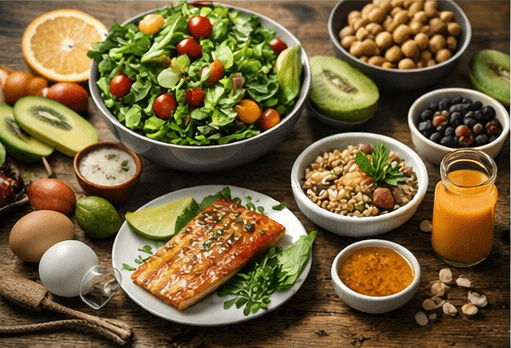
Start with protein at breakfast, 25–30g stabilises blood sugar and supplies neurotransmitter precursors. Eat regularly to prevent cortisol spikes triggered by hypoglycaemia. Include omega-3 sources like oily fish, walnuts and flax. Don’t fear carbohydrates, whole grains, fruit and root vegetables support serotonin and steady energy. Prioritise dietary diversity to nourish the microbiome. Consider vitamin D supplementation in winter. Magnesium-rich foods – leafy greens, nuts, seeds, dark chocolate- support stress regulation. Hydration matters more than people realise for cognition and mood. The principle is additive, not punitive. January demands nourishment, not restriction.
How can nutrition help regulate cortisol when work stress returns?
Blood sugar stability is foundational. Skipped meals or sugar-heavy snacks trigger cortisol to compensate. Balanced meals every 3–4 hours – protein, fats and fibre – keep stress hormones in check. Magnesium supports the stress response but is rapidly depleted by stress itself. Vitamin C plays a role in cortisol metabolism; adrenal glands concentrate it during stress. Omega-3s reduce inflammatory stress signalling. Caffeine deserves respect. Excess intake raises cortisol further. Swapping later coffees for green tea introduces L-theanine, which promotes calm alertness. The goal isn’t optimisation but reducing the metabolic stress load so your nervous system isn’t fighting on two fronts.
With supplements everywhere, how should people approach them responsibly?
Supplements should support, not replace, food-first foundations. Whole foods provide synergistic nutrients supplements can’t replicate. Fibre, blood sugar regulation and eating patterns are irreplaceable for mental health. Supplements can help correct documented deficiencies – vitamin D, B12, omega-3s – or support treatment under professional guidance. They’re not a shortcut, and “natural” doesn’t mean riskfree. The most effective approach is unglamorous: eat a varied, mostly whole food diet, then add targeted supplementation with professional oversight.
If you could offer one piece of advice for Q1 mental wellbeing, what would it be?
Protect your energy by being honest about your capacity. The first quarter carries invisible pressure to optimise, execute, capitalise on the “fresh start.” It’s when people overcommit and override fatigue out of obligation rather than alignment. Sustainable wellbeing comes from respecting your actual limits, even when they’re lower than you’d like. Saying no. Letting goals wait. Acknowledging that winter affects you and that recovery isn’t weakness. Paradoxically, this honesty produces better outcomes: clearer priorities, less resentment, and energy that renews rather than borrows from the future.